🆘🛩️Air India 787-8 AI Dreamliner Updates It Should Never Have Happened! Negligence And Shoddy Workmanship, Software Failures And Likely Software Hacks— Developing Air India Boeing Crash June 13th 2025 Vital Timeline Events Unfolding
𝒜 𝒫𝓁𝒶𝒸𝑒 𝐹𝑜𝓇 𝐻𝑜𝓅𝑒 𝒶𝓃𝒹 𝒟𝓇𝑒𝒶𝓂𝓈 ~ All books by Laurel Sobol available Online at Barns and Noble
https://www.barnesandnoble.com/s/laurel%20sobol
♥️Oregon Author ♥️Mom Homeschooler ♥️American Business Woman ♥️American Artist & Poet ♥️The Magical Fairytales ♥️OLT Organic Lifestyle Today ♥️Nez Perce📚 ♥️Mysteries Of Topanga Canyon ♥️Little House Of Miracles Barnes and Noble have all Laurel Sobol books available! Most kindle Amazon books archive only.
🆘🛩️Air India 787-8 AI Dreamliner Updates It Should Never Have Happened! Negligence And Shoddy Workmanship, Software Failures And Likely Software Hacks— Developing Air India Boeing Crash June 13th 2025 Vital Timeline Events Unfolding
The story here is a result of the FAA wrongfully collaborating with Boeing by allowing Boeing to investigate itself and restore public image by doing it corruptly and two by allowing Boeing to join Fortune 500 companies trading stocks globally for profit thus making money in billions for Boeing executives, CEO’s and shareholders while quality of Boeing jets dived further into the dirt. Whistle blower after whistle blower succumbed to early suspicious deaths after reporting and revealing flaw after flaw of Boeing plant atrocities that were leading to one catastrophe after another. Boeing and most insurance companies and surprisingly diverse companies follow suit to get rich quick with the stock market and deliver expensive cheap products or no service and products whatsoever as they collect dues and fees from clients and customers forced to purchase their products by insuring property and vehicles under lien holders during payoff of home, business and vehicle purchases still carried through escrows and banks.
🔴🔴🔴➿🔴🔴
⭐️ Scientists Finally Decoded The BLACK BOX & They Found Who DID THIS!
🔴🔴🔴🔴🔴🔴
It Should Never Have Happened! Negligence And Shoddy Workmanship, Software Failures And Likely Software Hacks— Developing Air India Boeing Crash June 13th 2025 Vital Timeline Events Unfolding
Notice the flames coming out the tail area where lithium-ion 8 batteries connected in series reside by tail fins? The other identical
8 li-ion batteries connected in series sits below cockpit.
🆘It Should Never Have Happened! Negligence And Shoddy Workmanship, Software Failures And Likely Software Hacks— Developing Air India Boeing Crash June 13th 2025 Vital Timeline Events Unfolding
The Air India flight AI171, which was a Boeing 787-8 Dreamliner…The people who died. Read to end for optimal understanding and compassion for the dead and their families.
How this

⭐️ The FAA Just Made a Shocking Ruling on the 787 – Aviation Industry Stunned
goes to this (RIP)

In a remarkable turn of events it’s been revealed by the search and rescue teams that the bodies recovered from the dashed 14 year old heavily loaded jet
Air India Boeing 787-8 AI Dreamliner contained what appeared to be dispersed body parts throughout the area as would e found after an intense explosion from within the jet itself making identification of the deceased nearby impossible to detect even though some personal items were found. An explosion of such magnitude that shreads humans like that would be expected from an internal jet fire explosion as a result of lithium batteries catching fire just prior to impact and or upon impact. The Dreamliner had 8 lithium-ion batteries connected in series, one under the nose of the jet, one in front of the tail. This would explain the very difficult experience of the ground recovery people suffering trauma after searching for survivors, body parts everywhere is chilling and explosive in and of itself. Along with enough jet fuel to fly to London onboard and an extra heavy jet load to boot.


❤️❤️❤️❤️❤️❤️❤️❤️❤️
From high flying to existential software hacks and or glitches, harboring deadly lithium batteries, RAT malfunctions, autonomous pilot override failures, known double engine Generator failures after double engine failures,
What possibly could go wrong? Well lithium batteries are like bombs going off with flames that won’t go out because they don’t need oxygen to burn, it’s self contained explosions!
🔴🔴🔴🔴🔴🔴🔴🔴🔴🔴🔴🔴🔴
Boeing 787 battery/charging system solutions—Good design or not?

How many lithium-ion type Batteries are in boeing 787s
Boeing officials have detailed their proposed fixes for the lithium-ion batteries aboard its 787 planes, and the changes include better insulation between the eight cells in the battery, gentler charging to minimize stress and a new titanium venting system.
But to prevent any new fire and smoke episodes like the ones that have grounded its fleet, Boeing proposed that the battery itself will be sealed inside a steel box that would serve as the last safety rampart if everything else fails.
As design engineers, you and I know that the solution is to prevent failure, not contain smoke and fire after the fact. At least Boeing designers have made an attempt at modifying the charging system. It’s difficult to zero in on a solution when investigators have not determined the root cause of a problem that has grounded all 50 Dreamliners worldwide since January. So Boeing said it can assure federal authorities, airlines and the public that its flagship aircraft is safe, and there is no chance of a battery fire. First let’s look at the way an aircraft power management system works and we ask readers to give us their comments and possible solutions.
The following is complements of Boeing Corporation:
Airplane power basics
On an airplane, the electrical system produces, controls and distributes power to all the other systems that need it — flight deck displays, flight controls, in-flight entertainment and more. It’s much like the electrical system in your house, which carries electricity throughout the rooms to power your lights, television and so forth.
Unlike your house, though, the airplane generates electricity as it flies. Airplanes don’t fly on battery power. Generators on the engines make power in flight.
The traditional airplane: electrical and pneumatic systems
On a traditional airplane, power is extracted from the engines in two ways to power other airplane systems:- Generators driven by the engines create electricity.
- A pneumatic system “bleeds” air off the engines to power other systems (e.g., hydraulics).

Modern jet engines are very efficient, but removing that high-energy air robs them of some energy. A pneumatic system means that the engines produce less thrust, so they must be bigger, work harder and use more fuel. The system also means more weight, fuel burn and maintenance due to the heavy ducts and equipment needed to manage that hot air.
The 787: A more-electric system
The 787 Dreamliner uses more electricity, instead of pneumatics, to power airplane systems such as hydraulics, engine start and wing ice protection. Benefits of the 787’s innovative, more-electric design include: - More efficient power generation, distribution and use — including new remote power distribution units, which reduce wiring and save weight (approximately 20 miles, or 32 km, less wiring than on the 767).
- Better fuel efficiency — better for airlines and the environment.
- Lower maintenance costs and fewer maintenance tasks.
- Less drag and noise.
Because the 787 uses more electricity than do other Boeing airplanes, the 787 generates more electricity, via six generators: two on each engine and two on the auxiliary power unit (APU, a small turbine engine in the tail).

On the ground, the 787 can be started without any ground power: The APU battery starts the APU generators, which start the APU to power the engine generators, which then start the engines.
In flight, the four engine generators are the primary sources of electrical power; the APU generators are secondary. Power runs from the generators to four alternating current (AC) buses, where it is either distributed for use as is (235 V AC) or converted to what other systems need.
Other power sources for the 787 include the main battery, used primarily for brief ground operations and braking; the APU battery, which helps start the APU; and ground power, which can connect through three power receptacles. The main battery, APU battery and ram air turbine also are available as backup power in flight in the unlikely event of a power failure.
As with every Boeing airplane, the 787 includes many layers of redundancy for continued safe operation, and the electrical system is no exception. For example, Boeing has demonstrated that the 787 can fly for more than 330 minutes on only one engine and one of the six generators and land safely.
A word from the NTSB
Lithium Ion Battery and Battery Charger (Main and APU) Description from March 7, 2013 NTSB report:
The Li-ion battery that is used for the Main and the auxiliary power unit (APU) battery contain 8 sealed lithium ion cells that are connected together in series with thermal conductive plates and packaged within an aluminum battery box. The battery also includes the battery monitoring unit (BMU), Hall Effect current sensor (HECS), temperature sensors, internal non-latching contactor, battery failure detection and diode module failure detection (detection of high rate charge current). The BMU, which is installed within the battery, incorporates redundant circuits that generate battery status, balance cell voltages, and makes battery Built In Test Equipment (BITE) and failure annunciation to the battery charger. These protection circuits are designed to protect against overcharge, over-discharge, overheating, and ensure proper cell balancing.
Each battery is charged by a dedicated Battery Charger Unit (BCU). All Battery signal and failure information are provided to the aircraft system through the BCU. If an internal battery failure is detected by the BMU, an inhibition signal is relayed to the BCU and it will stop all charging of the battery and shall annunciate the battery failure at the aircraft level.
1. The main battery system also includes a Battery, BCU, and Battery Diode Module (BDM). The Bus Power Control Unit (BPCU) monitors for failure indications from the Main Battery/Battery Charger and reports any failures. The BDM includes a large power diode and a battery side interface for the battery charger. The BDM protects the battery against high charge current when the Hot Battery Bus is paralleled with another 28 V Dc source via the Main Battery Relay (MBR), Electric Brake Power Supply Unit (EBPSU) contactors, or other equipment isolation failure.
2. The APU battery system also includes a Battery, BCU, and a Starter Power Unit1(SPU1), a BDM is not included or necessary for the APU Battery System. The Remote Data Concentrator (RDC) monitors for failure indication from the APU Battery/Battery Charger and reports any failures to the BPCU.
The baseline Li-ion battery is a 50 ampere-hour (end-of-life) lithium-ion (Li-ion) chemistrybattery. The main and APU batteries are identical, but provide electrical power sources to twodistinct functional areas. The nominal voltage of the battery is about 29.6 volts and when it isfully charged, the voltage is 32.2 volts.
According to Boeing’s System Safety Assessment document for the 787-8 Electrical Power System, Li-ion batteries are primarily made up of non-flammable components, however, the electrolyte and active material coatings on the negative and positive electrodes contain flammable components.
Over-charge of a Li-ion cell can result in the cell entering thermal runaway, which could result in the battery cell venting and the generation of smoke and fire. Cell venting with a fire is distinct from venting with smoke only; outside of an additional ignition source, over-charge is the only known failure condition that can result in venting with fire according to Boeing’s System safety Assessment. Cell venting with smoke, however, can be initiated by several failure modes, including external overheat, external short circuit of appropriate impedance, internal short circuit, recharging a battery that has been discharged to a state-of-charge that is too low, high rate charging at greater than a 1C (one times the capacity Amp hour rating of the cell), or charging at cold temperatures. Each cell has a safety vent that opens when the cells internal pressure reaches unsafe levels to eliminate unsafe conditions.
Each battery charger takes unregulated 28VDC power on its input and converts it to regulated DC power output. The output voltage level varies depending on battery state of charge (SOC), to between 22VDC at 0% SOC and 32.2V when fully charged. For all voltages, the charger current is limited to a maximum output current of 46A.
The battery charger receives inputs from the BMU such as temperature, cell balance, inhibition of discharge and inhibition of charge, etc, and regulates charging accordingly. The battery charger, via the Bus Power Control Unit (BPCU) for the main battery and a Remote Data Concentrator (RDC) for the APU battery, provide the battery parameters (such as battery current and battery voltage) to support the Electrical Flight Synoptic Page and the battery-charger failure indications (such as battery state of charge indication for dispatch) to the Engine Indication Crew Alerting System (EICAS)
Functional Hazard Assessment
Boeing’s 787-8 electrical power system safety assessment also included an analysis of lithium ion battery failure modes. This analysis determined that overcharging was the only known failure mode that could result in cell venting with fire. As a result, Boeing established additional design requirements to ensure that the likelihood of occurrence of an overcharge event was extremely improbable16. Boeing further determined that cell venting without fire could be initiated by several different failure modes, including external overheating, external short circuit of appropriate impedance, internal short circuit, recharging a battery that has been over discharged, a high rate of charging at greater than a 1C (one times the capacity Ahr rating of the cell), or charging at cold temperatures.
System Safety Assessment of the Main and APU Li-ion Battery Systems
Boeing incorporated several safety features inside and outside of the battery that were designed to prevent the conditions of cell venting and cell venting with fire. These features include:
1 A dedicated battery charger that charges within very precise voltage and current limits.
2 Cell balancing circuits to ensure all the cells in a battery are charged up equally and are within safe voltage limits.
3 Battery circuits that monitor cell and battery voltages and temperatures and control the battery charger accordingly.
4 An internal safety contactor to disconnect the battery in case of any high voltage conditions.
5 A battery diode module (Main battery only, the APU battery has no other possible charge sources) that prevents charging of the battery from any other sources other than the dedicated battery charger.
1 The starter power unit is used during APU starts only.
And now here are the changes being proposed
Charging system changes
Boeing, Thales and GS Yuasa have decided to narrow the acceptable level of charge for the battery, both by lowering the highest charge allowed and raising the lower level allowed for discharge. Two pieces of equipment in the battery system – the battery monitoring unit and the charger are being redesigned to the narrower definition. The battery charger will also be adapted to soften the charging cycle to put less stress on the battery during charging.
Usually most of this can be done by simple re-programming of the MCU charge voltage min/max levels and the charging rate. Monitoring is usually done through an ADC back through the MCU.


Changes inside the battery will help to reduce the chances of a battery fault developing and help to further isolate any fault that does occur so that it won't cause issues with other parts of the battery.
To better insulate each of the cells in the battery from one another and from the battery box, two kinds of insulation will be added. An electrical insulator is being wrapped around each battery cell to electrically isolate cells from each other and from the battery case, even in the event of a failure. Electrical and thermal insulation installed above, below and between the cells will help keep the heat of the cells from impacting each other.
Wire sleeving and the wiring inside the battery will be upgraded to be more resistant to heat and chafing and new fasteners will attach the metallic bars that connect the eight cells of the battery. These fasteners include a locking mechanism.
Finally, a set of changes is being made to the battery case that contains the battery cells and the battery management unit. Small holes at the bottom will allow moisture to drain away from the battery and larger holes on the sides will allow a failed battery to vent with less impact to other parts of the battery.
New Battery Enclosure

One change proposed by Boeing is to seal the batteries in a steel box, which would contain any smoke and fire.
The battery case will sit in a new enclosure made of stainless steel. This enclosure will isolate the battery from the rest of the equipment in the electronic equipment bays. It also will ensure there can be no fire inside the enclosure, thus adding another layer of protection to the battery system. The enclosure features a direct vent to carry battery vapors outside the airplane.
New titanium fixtures are being installed in the electronics equipment bays to ensure the housing is properly supported.
It looks like the designers have done everything possible to prevent another mishap, while not actually knowing what the root-cause was. So by over-designing almost every aspect of the charging, monitoring and battery system design, we trust that the engineers have a solid design in place that should be robust enough to fly.
Please give us your comments and technical expertise in this area—we would really like to begin a discussion on this issue.


🔵🔵🔵🔵🔵🔵🔵🔵🔵🔵🔵🔵🔵
Lithium Batteries and Advanced Airplanes
http://787updates.newairplane.com/787-Electrical-Systems/Batteries-and-Advanced-Airplanes


787 Boeing
The battery consists of
8 connected lithium-ion rechargeable cells connected in series
787 Boeing
The battery consists of
8 connected lithium-ion rechargeable cells connected in series
A powerwall next to people for scale, image credit: Gizmodo Australia
Electric jumbo jets: How many batteries do you need to get airborne? March 22 2016, 10 Comments

A jumbo jet with its nose cargo door open. It sure would be a nice place to put some... batteries...
Electric airplanes are perhaps the most exciting prospect for the future of aviation.
The record-breaking Solar Impulse II is one of the projects that shows how much things can improve. In a previous article, we covered the tech involved to get the Solar Impulse II airborne.
Last year, the plane was grounded in Hawaii because of batteries overheating. After completing a five-day long, 7,212km journey across the Pacific, the Solar Impulse 2 showed us the feasibility and the opportunities that lithium-ion batteries can bring to the aviation industry.
The decisions required to make those advances are being discussed as we speak.
A window of opportunities, if it opens
The Federal Aviation Administration published on March 9th a proposal to modify its Part 23 rules. This governs the design and alterations of piston-engine airplanes, which applies to small airplanes that can seat up to 19 passengers and have a maximum takeoff weight of 19,000 pounds or less (around 8,600 kg).This proposal, if approved, would be effective from September 30, 2017.
More about the proposal: why it matters
With rules as they are now, it’s nearly impossible to add technological improvements that modify the mechanics that have kept airplanes working since the 1960’s. This applies for almost every kind of airplane you can imagine, except those that are considered to be used as a hobby. That is, carrying 1 or 2 passengers. This turns out to be frustrating as there is great interest in offering more efficient designs that can reduce oil consumption during flights and reduce the environment footprint that today’s airplanes leave behind.
Yes, the proposal only applies for small airplanes, but the changes that could be done are of such a magnitude that they could open the doors for the whole industry. To get there, it'll take a long time because the improvements made have to be thoroughly tested for them to be safe, because that's the FAA’s highest concern right now.
To give an example, in 2013 Boeing introduced the 787 Dreamliner, an airplane that would add additional electrical systems, complying with the FAA’s requirements, in order to reduce fuel usage and be more eco-friendly. They used certain Li-ion battery from a manufacturer called Yuasa, and because it didn't have a proper short circuit protection built-in, it had a failure within the first few months of operation after its introduction, burning the circuit that goes over the battery in the process.
Here’s the comparison between a brand-new battery and the remains of the one involved in the incident.

This event caused a lot of concerns in specialized media, leading Yuasa to retire said battery from their website’s product listing. Boeing acted quickly and made the necessary modifications to their systems and no new reports of incidents regarding their electrical systems have come up to date.
This kind of circumstance is a headache because companies can’t use their full potential to provide more efficient designs to larger airplanes - a situation that this proposal can change if it provides results relevant enough for the idea to gain traction. An age of sustainable innovation in aviation with fewer roadblocks.
What can be improved today?
Considering the time it could take for such a change to happen in the industry, let's take a look at the feasibility of using electric batteries that are already in our homes and what’s available in the market. Let’s see how many we would need to satisfy the energy requirements of putting a commercial airplane in the skies and maintaining its energy consumption during a normal flight.
We'll take a broad approach to the calculations, to keep them simple and manageable. We’re not aviation experts nor are we considering the weight of the systems involved to keep the batteries connected and safe for travel. Just raw energy density.
For weight considerations, we used the weight capacity that the airplane has for fuel in kilograms.
Airplanes we took into consideration for the calculations
As test subjects, we will be using three widely-used large airplanes that many of has have flown on:
- The cargo-carrying Boeing 747-8F
- The world-famous Boeing 747-8I
- The narrow-body Airbus A320
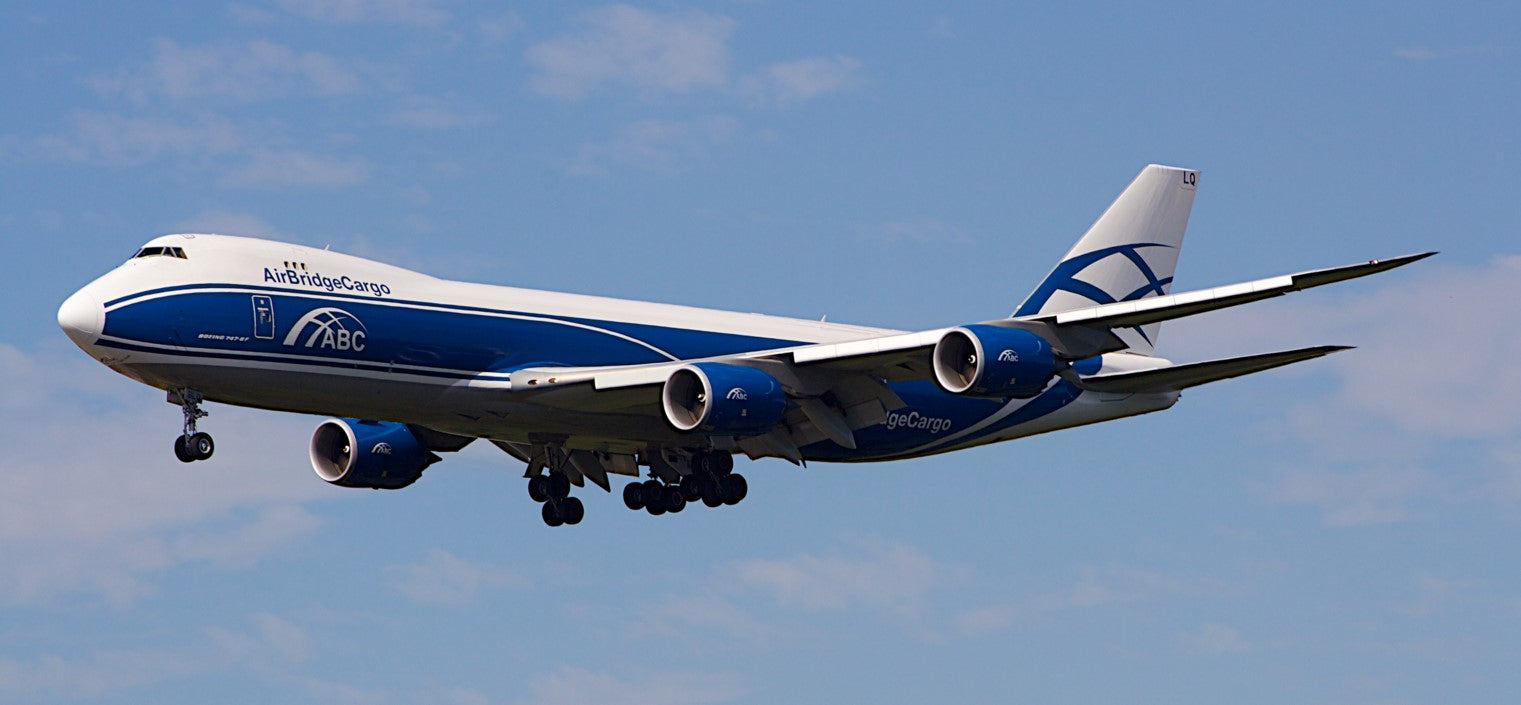
Boeing 747-8F
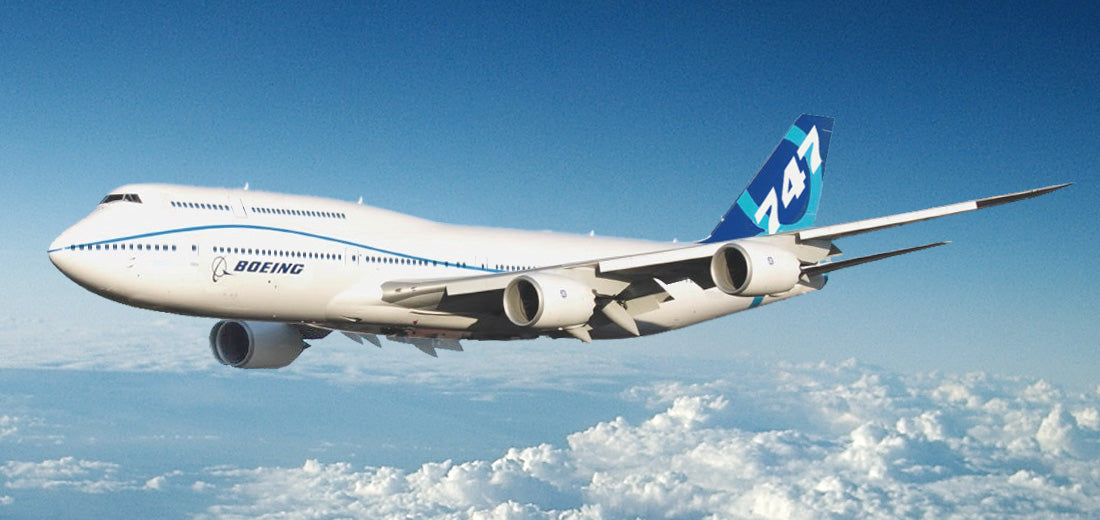
Boeing 747-8l
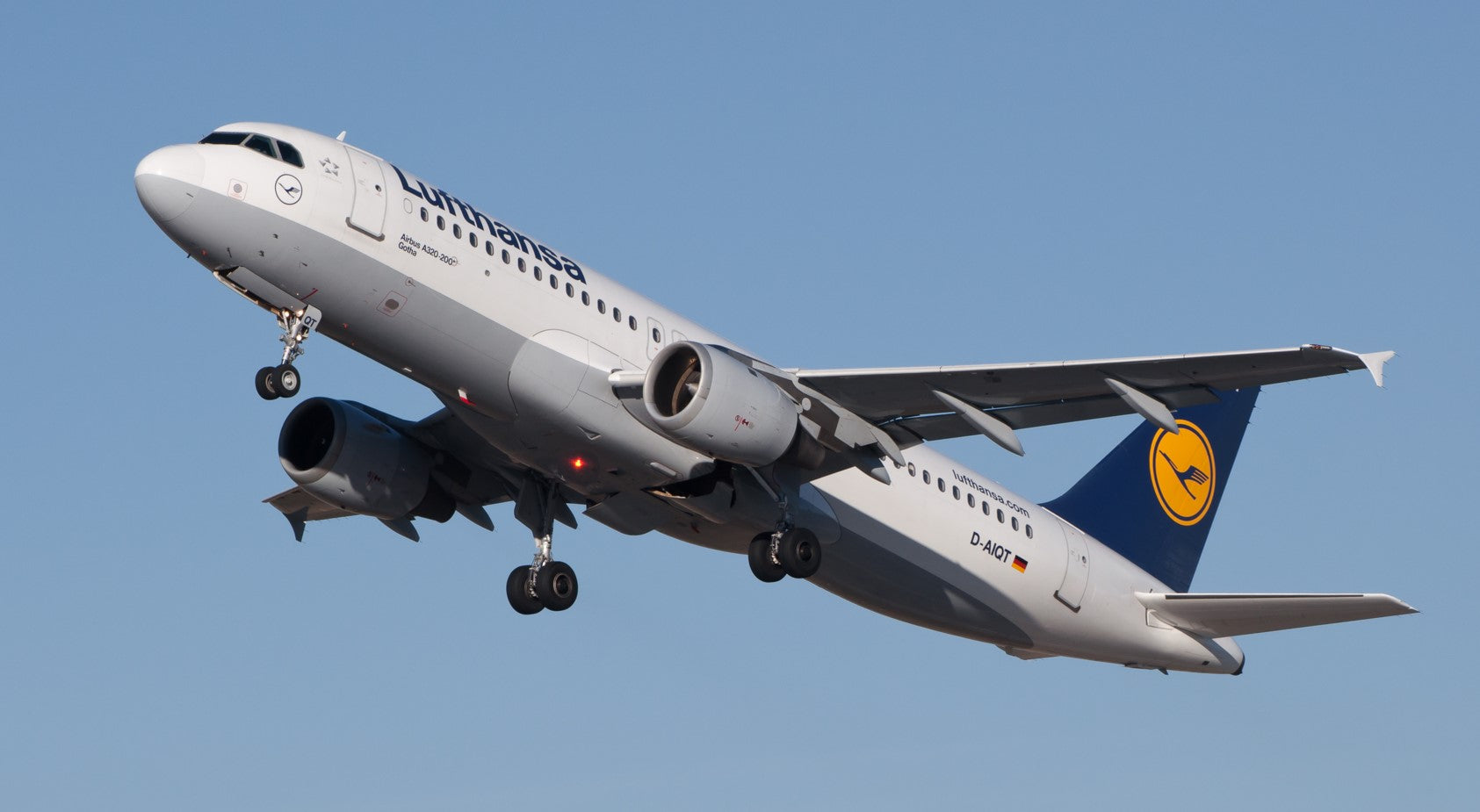
Airbus A320
The specifications of each airplane took into consideration for the calculations will be shown in a table, for practical reasons.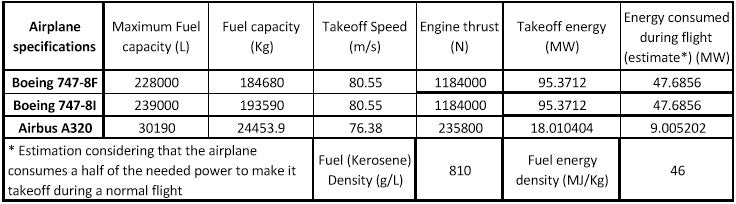
The battery contenders
As there’s such a wide variety of batteries in all types and sizes from each manufacturer, we’ll take two batteries that everyone knows - Blackberry and Samsung smart phone batteries.
Let’s also take two leading-edge batteries developed for more power-consuming applications, the Yuasa battery discussed earlier, and the Tesla Powerwall.
- D-X1 Blackberry (LiPo) battery
- Samsung Galaxy S4 (LiPo) battery
- Boeing 787 Dreamliner Li-ion battery (Manufactured by Yuasa)
- Tesla Powerwall (18650 Li-ion) battery
Specifications used for calculations are shown in the table below, and the considerations that are taken for each case.
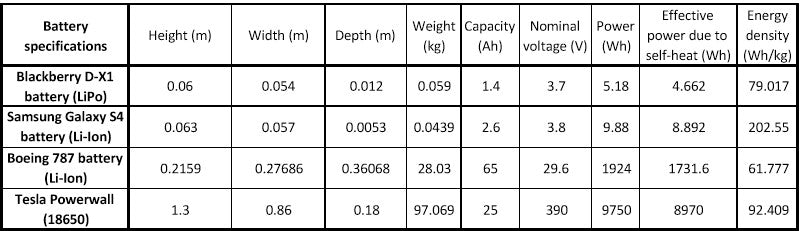
For each type of battery, we’ll determine:
- How many batteries required to power up the engines to reach takeoff speed (assuming that it takes a minute to do so)
- How many would be in the airplane if we swapped fuel with batteries (assuming no volume restrictions)
- How much energy would said amount of batteries represent
- How many would be needed to cover energy consumed in a normal flight
Results for D-X1 Blackberry batteries (LiPo)
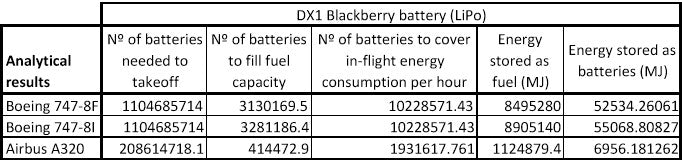
If we compare the amount of batteries we can carry compared to the amount needed to feed the enormous energy consumption rates that commercial airplanes have, we can see that there's a lot of work to do.
Looking at the data, we'll see that:
- We need 337 to 504 times the number of batteries to be able to reach takeoff speed.
- We need 3 to 5 times the amount of batteries to cover energy consumption in-flight per hour.
- Fuel has 162 times more energy density than the batteries for the same capacity (in kg).
The Blackberry D-X1 battery doesn’t look very good for these results, but that’s expected considering that fuel’s energy density surpasses greatly the one available to be used from the batteries by the airplane.
A custom lithium-ion pack would be an alternative to getting more energy density, providing at least three times the amount of energy these batteries provide with an improved configuration.
Results for Samsung Galaxy S4 batteries (LiPo)
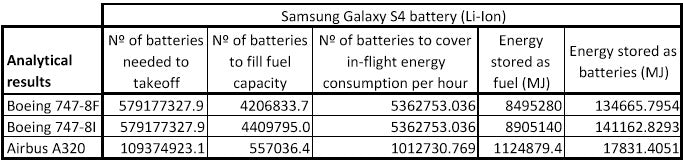
Taking a look to the data we have, we can conclude that:
- We’d need 132 to 197 times more batteries for the airplane to reach takeoff speed.
- We’d need 1.22 to 1.82* times more batteries to cover energy consumption in-flight per hour.
- Fuel has 63.08 times more energy density in the same capacity (in kg).
Results for Boeing 787 batteries (Li-ion)
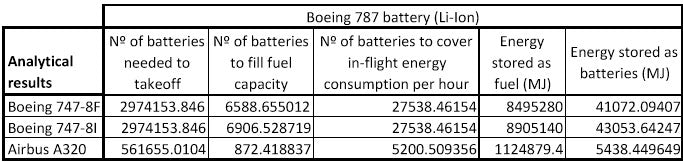
After considering the virtues of household batteries, let’s take a look at the bigger contenders on the block. Looking at our calculations, we can see that:
- We’d need 452 to 644 times more batteries for the airplane to reach takeoff speed.
- We’d need 4.18 to 5.96 times more batteries to cover energy consumption in-flight per hour.
- Fuel has 206.8 times more energy density in the same capacity (in kg).
The energy stored rate for these batteries is the lowest of the batteries tested, but that’s likely due to:
- Using old cell chemistry so it doesn't have to be recertified
- Added bulkiness of the protection system
- Cell chemistry used favors safety rather than performance
Results for Tesla Powerwall (18650)
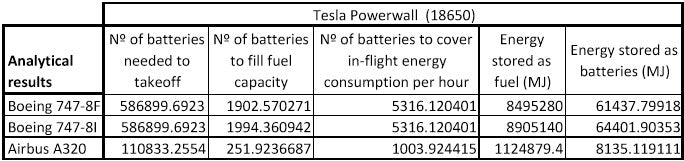
At last, but not least, we have a Tesla Powerwall. If you don’t know what it is, it’s a big box full of lithium-ion 18650 batteries that can power your house (optimally in conjunction with solar panels).
What would happen if you stuffed jumbo-jet fuel tanks full of Tesla Powerwalls?
In this case, we can see that:
- We’d need 295 to 440 times more batteries for the airplane to reach takeoff speed
- We’d need 2.66 to 4 times more batteries to cover energy consumption in-flight per hour
- Fuel has 138.27 times more energy density in the same capacity (in kg)
Compared to previous batteries, this battery is just below the Galaxy S4 battery in terms of stored energy. However, these batteries bring with them the idea of being constantly recharged via solar panels. If we manage to also borrow a few of the ideas used in the Solar Impulse II we could be looking towards a self-sustained airplane, at least for its in-flight energy consumption needs, as the batteries have more time to recharge themselves during flight.
Final thoughts
After giving a look at the strengths and weaknesses of various battery systems we can come to the conclusion that there’s a long way to go in order to improve both energy density and weight of batteries if we wanted to use them as the airplane’s only energy source, but we can see there’s a lot of motivation and interest to bring the technological improvements needed to do so as soon as possible. With innovating designs regarding engines, batteries, and even aircraft designs, the approval of Rule 23 modifications proposal could be a golden opportunity to show off the improvements that alternative energy sources can provide to the aviation industry, and the much-desired pollution reduction in order to have a more sustainable future.
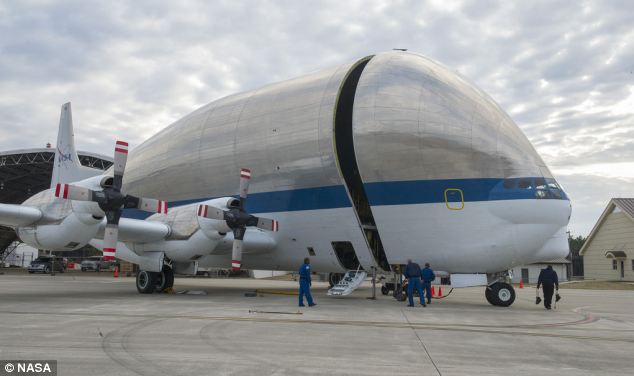
This NASA jumbo-jet breaks expectations and shows us that the future of aviation can be interesting.
Some possible further questions to ask:
- What is the minimal viable electric commercial aircraft (rather than a jumbo jet)? What are the most efficient?
- What would it take to bring the energy consumption in-flight per hour to equal current planes?
- If we need a lot of power in the beginning, could we use a rocket engine to save on fuel?
- What are better battery options - how about doing calculations with leading drone and RC batteries?
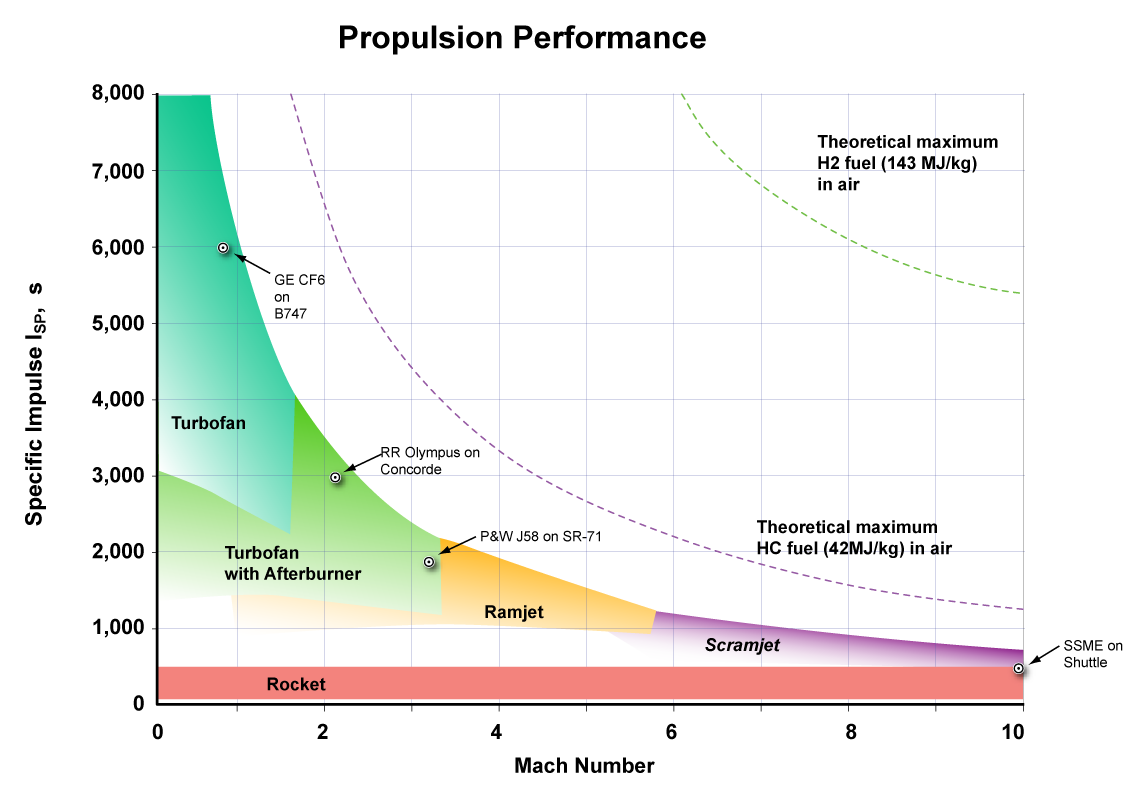
What other advantages do lithium-ion powered planes have over traditional engines? Could they perhaps go faster than traditional planes without a loss in efficiency?
Note: if somebody wanted to improve the calculations made, it would be a good idea to calculate the amount of energy needed to keep the batteries at an optimal temperature, efficiency between charges, and the weight of the equipment needed to build a large, safe custom battery pack.

Electricity has been used in powered flight since the pioneering days of aviation. Orville and Wilbur Wright used an electrical spark to ignite the fuel mixture in the engine that powered the Wright Flyer off the ground and into the history books. Today’s jet airplanes have much more demanding requirements and consequently more advanced electrical systems, of which batteries are an integral component.
The 787 Dreamliner has two primary rechargeable batteries – the main and auxiliary power unit (APU). While identical part numbers, they serve separate purposes.
The main battery “powers up” aircraft systems, bringing the airplane to life before the engines have been started. Once the engines are started, the electrical energy to run the systems comes from generators. It also is used to support ground operations such as refueling and powering the braking system when the airplane is towed. The main battery also provides backup power for critical systems during flight in the extremely unlikely event of a power failure. It is located in the forward electronics equipment (EE) bay, which is under the main cabin floor at the front of the airplane.
The APU battery supplies power to start the APU, which in turn can start the airplane engines. The APU, and its battery, also serves as part of the multiple layers of redundancy that would ensure power in the rare possibility of a loss of primary sources of power.
Matching the right battery to the requirements
After extensive testing, Boeing ultimately selected the lithium-ion type battery because it has the right functionality and chemistry to deliver a large amount of power in a short period of time to do a high-energy task like start a jet engine. It then has the ability to recharge in a relatively short period of time so that it is available for the critical backup role that it plays during flight. Earlier commercial airplane models, such as the 777, 747 and MD-11, used nickel cadmium (NiCd) batteries, which are heavier, larger and less powerful.
Batteries, like other technologies, have advanced significantly, and lithium-ion type batteries match up with the unique requirements of advanced aircraft.
Lithium-ion batteries have other key advantages that suit it for modern jet application:
The required high voltage and high current production
Improved power quality
An ability to recharge quickly
Similar functionality to that of NiCd batteries while weighing 30 percent less
Compact – about the size of the average car battery
Since entering service, Boeing 787 lithium-ion batteries, each with eight cells, have logged more than 2.2 million cell-hours on the ground and in the air during more than 50,000 flight-hours. No battery-related incidents occurred before January 2013, when the airplane experienced two events. Investigation into these events is in progress.
Boeing has been using lithium batteries for decades safely and successfully in other demanding aerospace applications. For instance, they have been successfully used in the satellite industry. Closer to home, lithium batteries are being used safely to power everything from consumer electronics, household power tools and many other applications.
Boeing design philosophy
Behind the selection of any individual component is a deep commitment and philosophy about airplane design. Boeing designs airplanes with two key objectives in mind: design to prevent failures, and design in protections in case they do. Above all, the goal is to ensure that no single failure will ever prevent safe operation of the aircraft. This philosophy is integral to the battery design, which includes multiple independent protections to the battery.
PREV | Ensuring Safety787 Electrical System | NEXT
All About the 787's Lithium-ion Battery
🔵
🔴🔴🔴🔴🔴🔴🔴🔴🔴🔴🔴


🔵🔵🔵🔵🔵🔵🔵🔵🔵🔵🔵
A Look Back: How Boeing Overcame The 787's Battery Problems
https://simpleflying.com/boeing-787-battery-problems-overcome/A Look Back: How Boeing Overcame The 787's Battery Problems
By
Laura Ash
Aug 29, 2020
https://simpleflying.com/boeing-787-battery-problems-overcome/
It might surprise you to know that the lastest 737 MAX grounding is not Boeing's first. In fact, back in 2013, the airframe suffered another blow on the back of battery problems with its 787 model. What happened, and how did Boeing overcome this hurdle?
2013 was an unfortunate year for Boeing in terms of its 787 Dreamliner range. Having first brought out the aircraft in 2007, the airframer ran into issues with the aircraft some years later. After a string of similar smoke and fire-related events, the Federal Aviation Administration (FAA) issued an investigation into the 787.
The issue stemmed from the aircraft's lithium-ion battery, and redevelopment was needed. Here's a look back at what happened.
Problems began in January 2013
The first anyone knew about problems with the Boeing 787 battery was on January 7th, 2013. A Japan Airlines 787 had arrived at Boston Logan International Airport at 10:00 local time (14:00 UTC). With 183 passengers and crew on board, the aircraft was being prepared for its next departure when a worker noticed smoke.
Immediately, the plane was evacuated and emergency services called. What they found was a fire in the belly of the aircraft accompanied by lots of smoke in the cabin. According to the Chief of the Massport Fire-Rescue Department, who spoke to CNN at the time, fire crews "advanced an aggressive, offensive fire attack."
The Fire Chief went on to say,
"We did have a flare-up. There was a small explosion - one of the batteries, and we again went in with a secondary attack and were again able to knock it down."
However, that was not the only issue. Two days later, a United Airlines 787 reported a wiring fault in the same area as the Japan Airlines fire. The FAA and Japanese Transport Ministry both launched separate reviews into the issue.
ANA 787 makes an emergency landing
At the time of the Japan Airlines and United Airlines incidents, 787s were still flying. It was not thought that the threat was severe enough for a grounding. These two incidents were, so far as the FAA thought, isolated instances.
That said, there would still be another incident to come. Perhaps the most severe battery fault with the 787 was when All Nippon Airways (ANA) made an emergency landing in Takamatsu Airport. The aircraft registered JA804A was carrying 137 passengers and crew and was performing a domestic route between Ube and Tokyo.
A burning smell wafted through the cabin at the same time that crews became aware of battery problems. Pilots secured the all-clear for an emergency landing at Takamatsu Airport, where the plane was evacuated. Only three sustained injuries as a result of the evacuation.
What was the issue?
Following this incident, the FAA ordered all 787 to be grounded on January 17th, 2013, while it investigated the issue. Its Airworthiness Directive and review focused on the critical systems of the aircraft, including special attention in the lithium-ion battery.
Initial findings determined that the fires on the aircraft had not been a result of excess voltage. Neither was the charging point to blame. Instead, it was believed that one cell within the battery had short-circuited. That had, in turn, caused thermal runaway into other cells resulting in overheating and fire.
As part of the investigation, at the end of 2014, the National Transportation Safety Board (NTSB) found fault with three entities. Firstly, GS Yuasa was indicted for the inadequate manufacture of the battery in Japan. Secondly, a lack of responsibility was placed on Boeing engineers who didn't carry out sufficient scenario testing.
Thirdly, the NTSB called the FAA into question for not highlighting the issue sooner.
Boeing gets to work with a solution
After initial investigations, Boeing was quick to come up with a solution to its battery issues. In February 2013, it submitted a proposal for the update of the 787 battery and later made changes. In a press release from March 2013, the airframer said,
"Design feature improvements for the battery include the addition of new thermal and electrical insulation materials and other changes. The enhanced production and testing processes include more stringent screening of battery cells prior to battery assembly. Operational improvements focus on tightening of the system's voltage range. A key feature of the new enclosure is that it ensures that no fire can develop in the enclosure or in the battery."
On April 19th, 2013, Boeing announced that the FAA had approved its battery improvements. It could now begin the process of returning the aircraft to service. While four months on the ground did incur a high cost for some airlines, Boeing's timely fix ensured that it wasn't any worse.
How bad are battery problems?
Of course, an airplane is at its best when all the components work, and no airframer will put out an aircraft unless that's the case. Boeing had expected to get around 10 million flight hours out of its battery, but that wasn't the case by the time issues arose.
At the time of the incidents, a battery fire could have been pretty severe, given that there are no fire suppression tools within that area. However, Boeing's solution to better contain potential fires makes this element much safer.
In addition, while ANA's fire could have been worse, the responsiveness of crews was crucial to the safety of all onboard.
Case closed?
Boeing's 787s are now even safer to fly thanks to essential updates. Since then, no large scale issues have arisen. That said, a United Airlines 787 did experience an overheating problem on its approach to Paris Charles De Gaulle Airport in 2017. This is thought to be an isolated incident and has not resulted in the further grounding of the fleet.
What's your reaction to this story? Let us know your thoughts in the comments.
The culmination of numerous known failures leading up to the crash of Air India AI 171
Air India Boeing 787-8 Dreamliner Aircraft operated piloted by veteran pilots Captain Sumeet Sabharwal and co-pilot Clive Clunder
🆘 How Air India Boeing Dreamliner Jets Use Highly Explosive Sensitive Lithium Batteries Ready to explode into fires impossible to stop until they extinguish on their own after untold damages to life and limbs and jetliners physical body’s. Why are lithium batteries used in Boeing jets, boats, space crafts when fire is the worst enemy?


Sub-assembly site

The 265-acre (107-hectare) site is located on the southern portions of the joint-use Charleston Air Force Base and Charleston International Airport located in the city of North Charleston, South Carolina.
The site was initially established in 2004 to build components for the Boeing 787 Dreamliner. Instead of conventionally building the 787 from the ground up, Boeing assigned subcontractors to do more assembly work, delivering completed sub-assemblies to the Boeing Everett Factory where workers would join them and integrate systems.[1] This approach was intended to result in a leaner, simpler assembly line and lower inventory,[2] with pre-installed systems reducing final assembly time by three-quarters to three days.[3][2]
The South Carolina site was used by two of these subcontractors: Vought Aircraft Industries and Global Aeronautica, a joint venture of Vought and Alenia Aeronautica, to build sections of the fuselage out of composite materials.[4][5] Global Aeronautica would receive mid-fuselage sections from an international supply chain including Alenia factories in Italy, and aft fuselage sections from the Vought factory next door. Global Aeronautica would then assemble these sections and then ship the more than 60 percent complete fuselage to Everett onboard the Boeing Dreamlifter, a fleet of converted 747s. The 334,000-square-foot (31,000 m2) facility broke ground in February 2005 and was completed in late 2006.[5]
Subcontractors had difficulties finishing sub-assemblies on schedule, and for many including Alenia, the work proved unprofitable.[6][7] Amid these issues, and in an effort to gain more control over the supply chain,[8] Boeing purchased Vought's share of the Global Aeronautica joint venture in June 2008,[9] Vought's standalone operations in July 2009,[10] and Alenia's share of Global Aeronautica in December 2009.[11]
Now controlling a large site of land in South Carolina, where 60 percent of 787 assembly was already taking place, Boeing announced in October 2009 that it would build a new 787 Dreamliner final assembly and delivery line in North Charleston.[12]Boeing said that the second production line was necessary to "meet the market demand for the airplane," but it came amid tense negotiations between the company and the International Association of Machinists and Aerospace Workers (IAM) union representing workers in Everett who had recently gone on strike.[13] South Carolina's unionisation rates, the lowest in the country at 2.7%, were stated by Boeing management as a reason to transfer production to there.[14] IAM said the decision was retaliatory and National Labor Relations Board agreed, filing a lawsuit against the company in April 2011. The lawsuit was dropped in December after IAM withdrew its complaint as part of a new contract with Boeing, clearing the way for production to begin in South Carolina.[15] Since then, Boeing has continued to challenge the rights of unions to organize at the plant,[16][17] and is alleged to have fired workers for their attempts to unionize.[18]
Ground was broken for the new 1,200,000-square-foot (110,000 m2) final assembly building in November 2009. The building contains eight positions for aircraft assembly and multiple floors of offices, conference rooms, and equipment storage. 18,000 tons of structural steel was used during the assembly and the building is 1,041 feet long by 618 feet wide.[4] The building also hosts 10 acres (440,000 sq ft; 40,000 m2) of solar panels on the roof that can generate up to 2.6 megawatts of electricity that is able to power the plant and giant autoclaves. Limited production began in July 2011, with the first airplane rolling out of the final assembly on April 27, 2012, taking its first flight on May 23, and delivered to Air India on October 5.
In addition to the new final assembly building and existing aft fuselage production, midbody assembly and Dreamlifter operations buildings, Boeing also opened a delivery center at the site in November 2011.[19] The center contains office space and conference rooms to meet with customers buying new planes, along with two jet bridges. A 360,000-square-foot (33,000 m2) two-bay paint facility was added in 2016, allowing Dreamliners to be painted on site, instead of being flown elsewhere.[20]
The first 787−10 was rolled out on February 17, 2017, and was considered a major achievement for the South Carolina factory, as it would be the first Boeing airliner variant assembled exclusively there.[21] The Everett plant was unable to build the −10 because the mid-fuselage sections are too large to fit inside the Dreamlifter.[22]
Undertaking drastic cost-cutting measures in the wake of the COVID-19 pandemic and its resulting impact on aviation, Boeing announced on October 1, 2020, that it would consolidate all of its 787 assembly at the South Carolina factory.[23][24] The move was completed in February 2021.
Quality-control issues
The South Carolina plant has been accused of shoddy production and ignoring safety defects in its airplanes in favor of meeting deadlines.[25][26][27]
In 2019, following the discovery of exterior damage on planes manufactured in Charleston, for a time Qatar Airways would only accept delivery of Dreamliners assembled in Everett. Later that same year KLM, which had discovered loose seats, missing and incorrectly installed pins, nuts and bolts not fully tightened and a fuel-line clamp left unsecured on its jet, complained that the standard of manufacture was "way below acceptable standards."[28]
Early in 2020, Boeing engineers discovered depressions in the 787's vertical tail fin, which could lead to structural failure under limited loads, affecting hundreds of planes or the vast majority of the fleet. Eight 787s were grounded due to the issue, which had been discovered in August 2019 at the South Carolina plant, but were delivered to customers anyway.[29][30] The company received further criticism after it was revealed that Boeing had eliminated 900 quality inspectors at about the same time that they failed to detect or stop the issues.[31]
In September 2020, Boeing admitted that the FAA was investigating quality-control lapses dating back to the introduction of the 787 in 2011 and considering requiring additional inspections for up to 900 of the roughly 1,000 Dreamliners in service.[29]By January 2021, Boeing had halted 787 deliveries to complete the inspection relating to the ongoing quality control issues.[32] The halt was only expected to last a month, but stretched on for more than a year, except for a brief restart between March and May 2021.[33][34]
Amid the ongoing investigation, the FAA stripped Boeing of its delegated authorityto inspect and sign off on 787 aircraft until the company can, "demonstrate consistent quality, stable delivery processes, and a robust plan for the rework needed on the undelivered aircraft in storage."[35] Since the January 2021 stop in deliveries, FAA has rejected several plans from Boeing to address the issues.[36][37]
As of April 2022, Boeing has not submitted a plan to inspect and repair already constructed planes, indicating a further delay of weeks or months before the resumption of deliveries.[38] The South Carolina plant continues to build planes at a reduced pace of less than two planes a month.[39][40]
🔴🔴🔴🔴🔴🔴🔴🔴🔴🔴🔴🔴
North Carolina Defense Contractor Resource Directory
The North Carolina Defense Industry Diversification Initiative (NCDIDI) and NC State University Industry Expansion Solutions created the defense contractor resource directory for North Carolina companies who are interested in or doing business with the Department of Defense (DoD). The purpose of this directory is to provide information on the various organizations, tools and other resources available locally and at the state and national levels that can assist with winning and executing federal contracts.
North Carolina boasts significant defense assets. According to the U.S. Department of Defense Office of Local Defense Community Cooperation (OLDCC) State by State Report, in fiscal year 2022, DoD spending in North Carolina totaled $5.6B, ranking the state 21st nationally in total defense contracts spending. In addition, North Carolina is home to six active military installations, houses over fifty percent of all Special Operations Forces and has the 3rd largest active duty presence in the nation.
FY 2022 Overview The DoD’s budget authority increased from $719.5 billion in FY 2021 to $795.7 billion in FY 2022.1 DoD contract obligations, grant obligations, and payroll spending in all 50 states and the District of Columbia totaled $558.7 billion, approximately $1,676 per U.S. resident and 2.2 percent of the country’s gross domestic product. Contracts for various products and services totaled $389.5 billion, thus comprising the majority of the spending, while DoD personnel payroll accounted for $159.4 billion, and DoD grant spending accounted for $9.7 billion.
North Carolina is home to 3,608 identified defense contractors who depend on the 578,000+ defense-supported jobs, various workforce development opportunities, and defense contracts for their livelihood. According to the most recent economic impact study, the defense sector is the second largest sector in NC with an annual economic impact of $66 billion. Therefore, NC is largely dependent on the defense sector for its economic stability.
The State of North Carolina is home to a diverse defense industry, with varied military and defense missions, needs and opportunities. In a proactive response to changes in federal defense budgets, the North Carolina Defense Industry Diversification Initiative (NCDIDI) was launched in 2017 by the NC State University Industry Expansion Solutions. The goal of NCDIDI is to help companies maximize their growth potential and cybersecurity resiliency while enhancing their strategic development planning and sustainability efforts. This program is funded through a grant awarded by the Department of Defense, Office of Local Defense Community Cooperation Office (OLDCC).
Hitt is co-contractor for Boeing’s $1B expansion in Charleston, S.C.

Arlington-based defense contractor is growing airplane manufacturing plant
BridgeTower Media //March 12, 2025
Falls Church-based Hitt Construction and North Carolina's BE&K Building Group have partnered as contractors on Boeing’s $1 billion expansion project in North Charleston, South Carolina. (Photo/Coleman Photography)
Related Articles


Developing Air India Boeing Crash June 13th 2025 Kills 242 People onboard - and additional 19 people died on the ground, 60 injuries.
Total fatalities 261 to date 7/5/2025.


The aircraft was carrying 230 passengers and 12 crew members; all but one passenger were killed. The crash also killed 19 people and injured at least 60 more on the ground.
This was the first fatal accident and hull loss of the 787 Dreamliner, which entered commercial service in 2011.
Vital Timeline Events Unfolding!

1️⃣ 2025 India-Pakistan crisis
2025 Pahalgam attack. —
https://en.m.wikipedia.org/wiki/2025_Pahalgam_attack
The 2025 Pahalgam attack was a terrorist attack on tourists by five armed terrorists near Pahalgam in Indian-administered Jammu and Kashmir in which 26 civilians were killed on 22 April 2025.[2][4][5] The militants mainly targeted Hindu tourists, though a Christian tourist and a local Muslim were also killed.[2][6][7] The attackers, armed with M4 carbines and AK-47s, entered the tourist spot in Baisaran Valley surrounded by dense pine forests.[8]This incident is considered the deadliest attack on civilians in India since the 2008 Mumbai attacks.[9][10]
2️⃣ War in progress between Pakistan and India display across England Pakistan and Indian migrants over unprovoked killings of many Indian Hindu tourists people in northern India. Pakistan and India trade inflicting payback for crimes against India Hindus.
Air India Ahmedabad plane crash updates: Govt constitutes high-level committee to look into possible causes of crash
Former CM Vijay Rupani’s mortal remains handed over to kin; Vijay Rupani was among the 242 passengers and crew members on board the London-bound Air India flight AI-171 that crashed in Ahmedabad. Former CM Vijay Rupani
Updated - June 16, 2025 10:26 pm IST
An Air India flight from Ahmedabad to London, carrying 242 passengers and crew, crashed shortly after takeoff on Thursday (June 12, 2025) afternoon. Barring one survivor, no one else could be rescued. Air India confirmed that 241 out of 242 people aboard the flight have died.
The mortal remains of former Gujarat Chief Minister Vijay Rupani, who died in an Air India plane crash in Ahmedabad last week, were handed over to his family members by the civil hospital authorities in Ahmedabad on Monday (June 16, 2025).
“Four days after the horrific crash of an Air India plane claimed 270 lives, 99 victims have so far been identified through DNA matching and 64 bodies, including that of former Gujarat chief minister Vijay Rupani, were handed over to their families,” officials said on June 16, 2025.
Also Read | Filmmaker missing after Ahmedabad plane crash; kin fear he may be among ground victims
Both the black boxes have been retrieved from the aircraft, a crucial discovery to help ascertain the possible cause of the accident.
Also Read | International agencies reach Ahmedabad to assist in crash probe
The Boeing 787-8 aircraft took off at 1:38 p.m. Minutes later, the aircraft plummeted into the B.J. Medical College hostel mess 5km from the airport, as over 100 students were gathered for lunch. A towering plume of smoke was visible from afar after a massive explosion.
🟠🟠🟠🟠🟠🟠🟠🟠🟠🟠🟠
4️⃣ Then…Stalling the release of three black boxes retrieved from the Boeing jet crash site.
Updated - June 16, 2025 10:26 pm IST
An Air India flight from Ahmedabad to London, carrying 242 passengers and crew, crashed shortly after takeoff on Thursday (June 12, 2025) afternoon. Barring one survivor, no one else could be rescued. Air India confirmed that 241 out of 242 people aboard the flight have died.
The mortal remains of former Gujarat Chief Minister Vijay Rupani, who died in an Air India plane crash in Ahmedabad last week, were handed over to his family members by the civil hospital authorities in Ahmedabad on Monday (June 16, 2025).
“Four days after the horrific crash of an Air India plane claimed 270 lives, 99 victims have so far been identified through DNA matching and 64 bodies, including that of former Gujarat chief minister Vijay Rupani, were handed over to their families,” officials said on June 16, 2025.
Also Read | Filmmaker missing after Ahmedabad plane crash; kin fear he may be among ground victims
Both the black boxes have been retrieved from the aircraft, a crucial discovery to help ascertain the possible cause of the accident.
Also Read | International agencies reach Ahmedabad to assist in crash probe
The Boeing 787-8 aircraft took off at 1:38 p.m. Minutes later, the aircraft plummeted into the B.J. Medical College hostel mess 5km from the airport, as over 100 students were gathered for lunch. A towering plume of smoke was visible from afar after a massive explosion.
🟠🟠🟠🟠🟠🟠🟠🟠🟠🟠🟠
4️⃣ Then…Stalling the release of three black boxes retrieved from the Boeing jet crash site.
Air India Boeing 787 crash: Black box data extraction, analysis underway at AAIB’s new lab in Delhi
The new and advanced AAIB lab, built by support of government-owned Hindustan Aeronautics Ltd (HAL) and inaugurated in April, has enhanced the agency’s ability to repair damaged black boxes, retrieve data, and conduct thorough analyses of accidents with high accuracy.
Written by Sukalp SharmaNew Delhi | Updated: June 27, 2025 01:41 IST
⭐⭐⭐⭐⭐MoCA also said that the AAIB “promptly initiated” an investigation and constituted a multi-disciplinary team following the tragic crash of Air India flight AI171 in Ahmedabad. This team, constituted as per international protocol, is led by AAIB Director General GVG Yugandhar, and includes an aviation medicine specialist, an air traffic control officer, and representatives from the US National Transportation Safety Board (NTSB). The NTSB is assisting the AAIB in the probe as the aircraft was designed and manufactured in the US by an American company—Boeing.
“On the evening of 24 June 2025, the team led by DG (director general) AAIB with technical members from AAIB and NTSB began the data extraction process. The Crash Protection Module (CPM) from the front black box was safely retrieved, and on 25 June, 2025, the memory module was successfully accessed and its data downloaded at the AAIB Lab,” MoCA said Thursday in an official release, providing an update on the recovery and examination of black box data.
“The analysis of CVR (cockpit voice recorder) and FDR (flight data recorder) data is underway. These efforts aim to reconstruct the sequence of events leading to the accident and identify contributing factors to enhance aviation safety and prevent future occurrences. All actions have been taken in full compliance with domestic laws and international obligations in a time bound manner,” the ministry added.
There were reports and speculation that the black box—FDR and CVR—could be sent to the US as AAIB’s black box lab might not be fully equipped to handle damaged units. Sources had indicated that there were deliberations on whether to send units to the NTSB Vehicle Recorder Laboratory in the US for data extraction and analysis, or perform the exercise at the AAIB’s new black box lab in Delhi. While the government had earlier said that the decision on where to extract and analyse data would be taken by the AAIB, the NTSB had declined to comment on the possibility of the black boxes being taken to the US.
“The investigation is being led by India’s Aircraft Accident Investigation Bureau. As stipulated by international treaty (ICAO Annex 13) the country leading the investigation is the entity to release any information about the investigation. I’d suggest reaching out to them,” an NTSB spokesperson had said on Wednesday in response to queries from The Indian Express.
Boeing 787 aircraft have two combined black box sets, each with the joint functions of CVR and DFDR. According to industry insiders, the combined black box is called an Enhanced Airborne Flight Recorder (EAFR), and regulations require two units to be located in the aircraft—one at the front and one at the aft, or rear section—for redundancy, in case of unit is significantly damaged or is never recovered. The first EAFR were recovered on June 13 from a building rooftop at the crash site in Ahmedabad, while the second was recovered on June 16 from the aircraft debris.
“Standard Operating Procedures were issued for their secure handling, storage, and transportation. The devices were kept under 24×7 police protection and CCTV surveillance in Ahmedabad. Subsequently, the black boxes were brought from Ahmedabad to Delhi by IAF (Indian Air Force) aircraft with full security on 24 June, 2025. The front black box arrived at AAIB Lab, Delhi with the DG, AAIB at 1400 hrs on 24 June, 2025. The rear black box was brought by a second AAIB team and reached AAIB Lab, Delhi at 1715 hrs on 24 June, 2025,” MoCA said in its official release.
The new and advanced AAIB lab, built by support of government-owned Hindustan Aeronautics Ltd (HAL) and inaugurated in April, has enhanced the agency’s ability to repair damaged black boxes, retrieve data, and conduct thorough analyses of accidents with high accuracy. Earlier, a black box lab under the aviation safety regulator Directorate General of Civil Aviation (DGCA) was being used by the AAIB, but the facility was old and lacked a few key capabilities needed for thorough and accurate data retrieval and analysis, said a source. That was one of the reasons why a number of black boxes from aircraft involved in serious accidents were sent to overseas labs.
The purpose of the FDR is to record flight data on numerous parameters of aircraft operations, while the CVR records the flight crew’s voices, as well as other sounds inside the cockpit, including engine noise, stall warnings, landing gear extension and retraction, and other clicks and pops. Communications with air traffic control, automated radio weather briefings, and conversation between the pilots and ground or cabin crew are also recorded.
With the data retrieved from the FDR, investigators can generate a computer animated video reconstruction of the flight. The investigators can then visualise the aircraft’s attitude, instrument readings, power settings, and other characteristics of the flight. This animation enables the investigating team to visualise the last moments of the flight before the accident.
“They (FDR and CVR) can provide information that may be difficult or impossible to obtain by other means. When used in conjunction with other information gained in the investigation, the recorders are playing an ever-increasing role in determining the Probable Cause of an aircraft accident,” the NTSB says on its website.
5️⃣ These US airlines were targeted by cyber hackers this month
The FBI issued an alert that the notorious criminal cybercriminal group, Scattered Spider, was ‘expanding its targeting to include the airline sector’
Rhian Lubin in New York
Friday 27 June 2025 22:25 EDT
Hackers are targeting U.S. airlines as the FBI issued an alert Friday about a notorious cybercriminal group.
So far, at least two U.S. airlines have been affected by cyberattacks, though the details of the impact of the incidents were not clear.
WestJet and Hawaiian Airlines have both been victims of cyberattacks recently.
The FBI singled out Scattered Spider in an alert Friday, in which the bureau said the group was “expanding its targeting to include the airline sector.”
Scattered Spider was linked to the hacking and extortion of Caesars Entertainment and MGM Resorts International in 2023, which led the former to pay a ransom of approximately $15 million.
The chief technology officer of Google’s cloud security company, Mandiant, warned the aviation industry to ‘take steps immediately to harden systems.’ (PA Wire)— Should the hackers have extended their dubious hacks further into the airline industry included breaching the ill fated 2011 production date of Air India Boeing 787 Dreamliner? Other airlines or Boeings?
WestJet said it had made “significant progress” to resolve a hack it suffered earlier this month.
Hawaiian Airlines told the Securities and Exchange Commission it discovered its hack on Monday.
“On June 23, 2025, Hawaiian Airlines, an Alaska Air Group, Inc. subsidiary, identified a cybersecurity incident affecting certain information technology systems,” the company said in a filing. “Upon learning of this event, we immediately took steps to safeguard Hawaiian’s operations and systems. Flights are currently operating safely and as scheduled.”
The Federal Aviation Administration told Reuters it was in contact with Hawaiian Airlines. “There has been no impact on safety, and the airline continues to operate safely. We are monitoring the situation,” the agency said.
6️⃣ Boeing already arguing with families who lost family members and friends about liabilities and how their jets are flawless regardless of how many Boeing employees who were killed trying to protect fliers from poor lousy Boeing management, technicians covering up constant known safety issues and problems covered up one bandaid at a time never fixing the problems over ten years long as new problems surface. Most issues pertaining to a North Carolina US Military operated Boeing manufacturing facility that started using military personnel at Boeing to speed up production and gain stock credibility as a viable Fortune 500 company people could get rich from. Boeing then sought money for investments to their stockholders as quality in Boeing jet production dived to sub safety levels ever since. Air India Boeing 787 Dreamliner had manufactured parts made at the North Carolina Boeing Company in 2011.
Air India Boeing 787 Dreamliner is flawed: Whistleblower sounded alarm early on
A year before June 13, 2025, Tuesday's Air India crash in Ahmedabad, which involved a Boeing 787 Dreamliner, a whistleblower had flagged structural flaws in the manufacturing of the wide-body jet, alleging unsafe assembly practices and shortcuts. While the cause of the Air India crash remains under investigation, there are no links yet to the earlier warnings. In 2024, Boeing engineer Sam Salehpour raised serious concerns about the structural integrity of the Boeing 787 Dreamliner. He alleged that the American aircraft manufacturer took shortcuts while manufacturing the aircraft model's fuselage and warned it could lead to catastrophic failures over time. Following that, the US Federal Aviation Administration launched an investigation into the same.
Almost a year later on Thursday, an Air India Boeing 787-8 Dreamliner, operating as Flight AI171 from Ahmedabad to London, crashed shortly after take-off from Sardar Vallabhbhai Patel International Airport. The aircraft, carrying 242 passengers and crew, plummeted into the city's Meghani Nagar area, killing more than 200.
The cause of the Air India crash is now under investigation by the Directorate General of Civil Aviation (DGCA) and there is no initial evidence linking it to the concerns raised by Salehpour. However, the tragedy has reignited scrutiny of the celebrated wide-body jet, the 787 Dreamliner, and the company Boeing itself.
Boeing Airplanes, in its statement on the Air India crash, said that it was "in contact with Air India regarding Flight 171", adding it stood "ready to support them".
"Our thoughts are with the passengers, crew, first responders and all affected," the aircraft manufacturer said in the statement on Tuesday.
The crash in Ahmedabad marks the first fatal accident involving a 787 since its commercial debut in 2011.
WHISTLEBLOWER WARNED OF STRUCTURAL FLAWS IN 787 ASSEMBLY
Salehpour, an engineer at Boeing for over a decade, in January 2024, claimed that improper fastening of fuselage sections during assembly posed risks to the aircraft's longevity. He claimed that the flawed manufacturing could potentially cause it to break apart mid-flight after thousands of trips.
His allegations, detailed in interviews with The New York Times and a formal complaint to the Federal Aviation Administration (FAA), prompted an ongoing FAA investigation into the 787’s production processes.
Salehpour's red flag also extended to Boeing's 777 jets.
The whistleblower alleged that the gaps in fuselage joints and excessive force used to align parts, could lead to premature fatigue in the aircraft's composite materials.
Salehpour's 2024 complaint detailed how Boeing's assembly process for the 787 involved forcing misaligned fuselage sections together, sometimes with workers physically jumping on parts to align them.
"I literally saw people jumping on the pieces of the airplane to get them to align... By jumping up and down, you're deforming parts so that the holes align temporarily... and that's not how you build an airplane," Salehpour was quoted as saying by CNN.
He warned that these shortcuts, affecting over 1,000 Dreamliners, could compromise the aircraft's safety, which was designed to withstand long-term flight stresses.
The FAA had previously investigated similar issues, halting 787 deliveries for nearly two years starting in 2021 due to gaps in fuselage joints.
Boeing claimed that it had addressed these concerns, adding that the planes were safe and claimed that extensive testing showed no immediate safety risks.
However, Salehpour's attorneys argued that the FAA was surprised to learn the gaps persisted, and he faced retaliation, including a transfer to the 777 program, where he identified similar issues.
Boeing denied these allegations, and showed its confidence in the 787's safety, saying the physical manufacturing changes would have "no impact on the durability or safe longevity of the airframe", the New York Times reported in April 2024.
Boeing spokesman, Paul Lewis, then said the company had done extensive testing on the Dreamliner and was "determined that this is not an immediate safety of flight issue".
737 MAX'S DOOR PLUG BLOWOUT ADDED TO BOEING'S SAFETY WOES
Concerns with the 787 and 777 came to light amid broader safety issues at Boeing, most notably involving its 737 Max jets.
The 737 Max was grounded worldwide from March 2019 to December 2020 after two fatal crashes, Lion Air Flight 610 and Ethiopian Airlines Flight 302, which killed 346 people. The move was linked to flaws in the Maneuvering Characteristics Augmentation System (MCAS) of the aircrafts.
Later in January 2024, the 737 Max 9 faced another grounding after a door plug blowout on an Alaska Airlines flight. It further exposed the ongoing quality control issues at Boeing.
These incidents, combined with whistleblower claims like those of Salehpour and the late John Barnett, who raised concerns about Boeing's South Carolina plant before his mysterious death in 2024, fuelled distrust in Boeing's manufacturing practices.
The American manufacturer has since faced FAA restrictions, a leadership overhaul, and a criminal investigation by the Justice Department.
🔵🔵🔵
This doesn’t begin to address the Boeing 787 and other model jets unsolved potty leaks, other water leaks trailing down to sensitive electronics on lower level of Boeing jets that are real time-bombs about to happen at any time.
India Air Boeing Dreamliner jet may have experienced internal hacks on top of known hazards potentially developing such as nearly ungodly double jet engine failures simultaneously and RAT failure overriding pilot operations trying to abort failing jet operations. 🔴🔴🔴

INCIDENT: JetBlue A320 Deploys RAT After Both Generators Fail
The NTSB is investigating an incident in which both engine generators of a JetBlue A320 stopped working in flight. Its crew landed safely.
This incident happened on Thursday the 3rd of August this year, but the NTSB released its preliminary report on it this week. It involved JetBlue flight B6-18, a regular revenue flight, departing from Fort Lauderdale Hollywood International (KFLL) in Florida, USA.
The incident aircraft. Photo: Dave from Airport Operations, CC BY-SA 4.0
The domestic flight’s destination is Jacksonville International (KJAX), also in Florida, and it typically lasts just under an hour. On the day of the incident flight, there were 91 people on board the JetBlue A320. The flight left Fort Lauderdale with a 45-minute delay, departing from runway 10R.
It appears that the majority of the flight was routine. Before the incident, the crew of this JetBlue A320 climbed to a relatively low FL210, which isn’t unusual for this particular flight. They then set up an approach into runway 8 in Jacksonville.
7️⃣ Air India plane crash: Boeing 787 ‘Dreamliners’ had battery issues since beginning, 6 grounded on induction
The CAG has described the aircraft’s mechanical defect as 'a design deficiency attributable to M/s Boeing'
 By Sanjib Kr Baruah
BUpdated: June 13, 2025 19:42 IST
https://www.theweek.in/news/india/2025/06/13/air-india-plane-crash-boeing-787-dreamliners-had-battery-issues-since-beginning-6-were-grounded-on-induction.html
Soon after their induction into the fleet of the then government-owned Air India Limited (AAL) in September 2012, the batch of all six brand new Boeing 787 ‘Dreamliners’ were grounded for over four months (from January 17, 2013 to June 4, 2013) because of a malfunctioning of their lithium-ion batteries, a 2017 report by the Comptroller and Auditor General (CAG) had revealed then.
In total, AIL had ordered 27 B-787-800 aircraft from M/s Boeing.
Chosen for their high-energy density and long cycle life, lithium-ion batteries in the aircraft were used for starting the auxilliary power unit (APU) and providing backup power for electronic flight systems.
However, they come with inherent safety risks, such as fires, if a short-circuit or high operating temperature occurs.
ALSO READ | India to ground Air India’s Boeing 787 fleet?
The CAG has described the aircraft’s mechanical defect as “a design deficiency attributable to M/s Boeing”.
The CAG’s findings are now significant in the backdrop of the crash of a ‘Dreamliner’ operating on the Ahmedabad-London route on June 12.
Considered to be the worst aviation disaster of a single aircraft in India’s aviation history, the aircraft crashed into a medical college hostel located near the Ahmedabad International Airport, about 30 seconds after take-off. The crash killed at least 246 people, including 241 onboard the aircraft.
ALSO READ | Ahmedabad Air India tragedy brings focus back to aviation safety, regulatory oversight
Technical snags continuously plagued the ‘Dreamliner’ since its inception in AIL’s fleet, leading to its grounding for 274 hours in 2013, and 1,464 hours in 2016.
The national auditor also said that some of these problems were of a recurring nature.
Another key finding by the national auditor was the higher weight of the B-787-800 aircraft.
“On receipt of the aircraft, it was observed that the empty weight of the aircraft was higher by ten tonnes, resulting in additional fuel consumption.”
WORLD
8️⃣ Boeing 787 Dreamliner: US aviation expert makes BIG claim on Air India plane crash, says it may have occurred due to...
A top aviation expert has suggested a possible cause of the tragic Air India plane crash of June 12. Mary Schiavo, a former Inspector General of the US Department of Transportation, made the comment in a recent interview. Read on to know more on this.


A top aviation expert from the United States has suggested that a computer error in the Boeing 787 Dreamliner plane operated by Air India on June 12 may have led to its tragic crash. Mary Schiavo, a former Inspector General of the US Department of Transportation, made the comment in a recent interview with The Sunday Guardian newspaper. Schiavo told the publication the aircraft may have suffered what she called a dual-engine thrust rollback caused by a software failure -- a malfunction that had previously been documented and investigated in several Boeing 787 incidents.
Highlights similar Boeing incident
Schiavo also drew comparisons with a 2019 Nippon Airways incident, saying that a similar dual-engine rollback was investigated by the US National Transportation Safety Board, which found the cause to be a software glitch. After that, corrective action was mandated, but it remains unclear whether the issue was uniformly fixed across all Boeing 787 planes.
✈️ She went on to stress the need for an independent and rigorous probe by the Indian aviation watchdog, the Directorate General of Civil Aviation (DGCA). "Investigators need to examine not just what Boeing has provided, but also what it hasn't," Schiavo stated.
Air India plane crash tragedy
On June 12, a Boeing 787 Dreamliner plane operated by Tata Group-owned Air India, carrying 242 people -- 230 passengers and 12 crew members -- crashed moments after taking off from the Ahmedabad international airport, killing almost everyone on board. The crash marked one of India's deadliest aviation accidents ever. The plane crashed in a residential area close to the airport and killed dozens others on the ground. Ramesh Viswashkumar, a 40-year-old British citizen of Indian origin, is the sole survivor of the tragic incident.
Three funerals and a flight crash: Relatives paying last respects to loved ones were among deceased Air India passengers
The Air India flight AI171, which was a Boeing 787-8 Dreamliner, crashed into a medical college hostel, killing 241 on board and several others on the ground
 By The Week News DeskUpdated: June 13, 2025 18:40 IST
https://www.theweek.in/news/india/2025/06/13/three-funerals-and-a-flight-crash-relatives-paying-last-respects-to-loved-ones-were-among-deceased-air-india-passengers.html
Among the scores of passengers who lost their lives in the Air India crash in Ahmedabad on June 12 were people who travelled to pay final respects to their relatives.
The Air India flight AI171, which was a Boeing 787-8 Dreamliner, crashed into a medical college hostel, killing 241 on board and several others on the ground. Among the victims was former Gujarat Chief Minister Vijay Rupani. The lone survivor on the flight was identified as Vishwash Kumar Ramesh. ascertain the cause of the tragedy, the sorrow of the relatives who lost their loved ones in the horrific tragedy remains.
London resident came to immerse wife's ashes
One of them was a UK-based Indian man who came to Gujarat's Amreli district to immerse his wife's ashes in the Namrada. Arjun Manubhai Patolia's wife Bharatiben died in London last week and he came to his hometown for her funeral rites as requested by her before her death. Their two daughters, aged eight and four, are still in the UK. He was going back to London when the AI717 flight crashed in Ahmedabad.
UK chef was returning after attending father's funeral
Prakash Chandra Menaria, a UK-based chef, came to his hometown in Udaipur's Menar for his father's funeral two months ago. After his long leave, he was returning to London when the tragedy occurred. According to ETV Bharat, his return ticket was cancelled twice. His friend Vriddhi Chandra Menaria joined him when the ticket was booked the third time. Both of them died in the Boeign 787-8 crash.
Trio of family was headed to London for funeral
Another family from Porbandar was travelling to London to attend a funeral was also among the deceased. Yasha Kamdar, 32, her one-year-old son Rudra Modha and her mother-in-law, Raksha Modha, 58, boarded the flight to pay last respects to her father-in-law Kishor Modha who died due to cancer.
Yasha's husband Kishan Modha had a narrow escape as he postponed his trip. Citing the relatives, The Times of India reported that the family was planning to settled down in Gujarat after folding up their business in London.
Comments
feaherwinglove on August 17 2020 at 11:39AM
To make the most obscure pun I’ve come up with so far, the idea of a solar-powered airliner is a bunch of TAT. The double entendre is “tat” the English (culture) insult for crappy product or information, and TAT, which stands for Transcontinental Air Transport, or “take a train”, depending on the passenger’s mood. Back in 1927, the world’s best airliner was the unprofitable Ford Trimotor, which was strictly a day VFR affair due to the lack of technology to fly blind. Pilots followed the rail lines during the day, flying about twice as fast as a train, taking off at dawn, landing at dusk, and the passengers would transfer to sleeper bunks on a train for the much shorter (in terms of distance) overnight legs. It took about 48 hours to get from San Francisco to Miami or vice versa. The reason a solar powered airliner with today’s technology (i.e. we don’t develop some miracle stuff like the sarium krellide of Star Trek’s hand phasers) would have such flying characteristics is because kinematic power is rho * (velocity squared) / 2 Getting that rho (air density) down is why jets like to fly at high altitude. Going twice as fast, however, doesn’t require four times as much power as this equation implies: the power used during cruise is the difference between the kinetic power supplied by the incoming air (v therefore being the airplane’s true airspeed) and the total kinetic power coming out of the engines (v being the engine exhaust velocity.)
Efficiency requires that difference to be as small as possible, and that’s why airliner engines have been getting fatter for the last fifty years. The best one to look at is the 737 series, which started out with thin, noisy JT8 engines that looked like trimmed stogies, then went to the CFM56 series, and then got itself grounded trying the LEAP engines. As the engines got wider, they didn’t want to extend the landing gear for various complicated reasons, and so they squashed the nacelles, clocking the accessory drive and flattening the bottom of the intake leading to its distinctive hamster cheek look, and eventually moved it forward to be mostly ahead of the wing. Making that difference smaller also reduces the turbulence around the exhaust nozzles, and that’s the main source of noise for jet aircraft. Propellers do even better, but they can’t approach the speed of sound because the flow separation from the shock waves at the tips both kills their efficiency and makes a tremendous amount of noise. Really big, slow propellers do best, and that’s what we see on the Solar Impulse series and the Daedalus/Contraventus aircraft (same airframe being powered by the pilot (i.e. pedaling it like a bike) or batteries and solar panels; as far as I know, the latter is only theoretical at this time.)
Now for the TAT part: The beauty of modern airliners is the ability to fly day, night, and in nearly all weather. But that’s kiboshed if you require the sun for power. Solar power requires surface area and surface area creates drag, so the airliner is going to be going a lot slower, but will be helped out by the reduced power of smaller kinematic increment and lower speeds (the same exhaust-airspeed difference at lower speeds produces a lower difference of kinetic energies, and thereby less power needed for the engines. Unfortunately, one winds up with the same energy used per bit of distance.) Batteries, as we can see here, aren’t all that great for cruising, but hopefully can be enough to get such an airliner above the clouds in IFR weather where the sun will shine on the wings with the solar panels. That will keep it from going completely to TAT, but they still won’t be able to fly at night. They will still be more vulnerable to weather than jet airliners because the slower and lower wing-loaded aircraft are more affected by the wind. A right-angle crosswind that would hardly bother a 737 on a typical landing would be enough to turn a Daedalus into a tumbleweed.
I think that it’s far more likely that green energy generated on the ground will run electric high-speed trains, and that solar powered electric airliners will never happen, except possibly in spots where the terrain doesn’t allow much else. The first landing of a Contraventus or Solar Impulse aircraft at Courchevel is likely to be quite entertaining, even if it doesn’t crash.
Aaron Lal on June 01 2019 at 05:43AM
Nice post ever! I really appreciate the efforts you have made. You have conducted thorough research and written a great post. It will be extremely useful for many. Keep sharing!
Joshua Skinner on September 07 2018 at 08:25AM
I would almost ignore the takeoff power requirement and cover that with an electric catapult system. The peak power requirement is then the climb portion of flight.
Priusmaniac on July 23 2018 at 06:09AM
I would like to add that on another planet where Oxygen is not freely available, the fuel must be supplied with the needed Oxygen to combust. Since that Oxygen weight is about 3 to four times that of the jet fuel, it implies that fuel is not 20 times more energy dense then batteries but only 4 to 5 times.
Dmitry on June 28 2018 at 12:32PM
It is wery smart to compare MW of aviation fuel with MJ for batteryes (i need time to compare your data myself). And then, what mass of batteryes for each plane? For fuel, we know, for batteryes… it need to calculate :)
lucamax on September 26 2017 at 10:16AM
ruetger is wrong.
The potential energy of fuel per kg is 80 times the potential energy of 1 kg of Lipo/ Li ion
Anyway without too much maths lets consider the range of a car with 200 kg of diesel and 200 kg of batteries tis is the best way to compare actually the gap between fuel and batteries .
Another aspect you did not consider is that fuel consuption will make the car / plane lighter while the battery when deployed will become a ballast .
About propulsion system, a jet turbine has a much higher efficiency .
The 98% efifciency of electric motor is nothing, better, it is marketing, while the energy storage of batteries is poor because you need to carry a lot of weight for energy storage and this will kill your general efficiency.
Ned Williams on May 31 2017 at 02:18PM
Umm Nasa Jumbo Jet?
See those 4 pointy things that each wing has two of? Those are called Props.
asi in proprellers…that is not a jumbo JET its a prop plane.
Brian on August 25 2016 at 05:40PM
You total confused power in watts with energy in Watt Hour.
ruetger is correct, when you include efficiency is 20 times. and the best new lithium cells get 400 WH/km: more like 10 times.
Power is what you need for take off. Using A123 type batteries, you get 120W per 80g. (Phone batteries are poor choice for comparison. ) That’s about 1W per gm. To get 100MW will require 100 tons of batteries. Which is pretty cool, because that’s less than the fuel wt they carry now. But the range is going to be about 20 times less.
There is another factor to include. The comparative wt’s of the engines and the fuel tanks. Jet engine probably win the power density. Big jet engines are around 5-10WK/kg versus the best electric airplane motors 5 KW/kg.
It’s amazing that electrics have come so far,but battery energy, not power is the big limitation now. I think the electric motors can match or beat the turbines as well, and they do pretty well against them now.
John Ragzdale on April 24 2016 at 11:49AM
If a loaded 747 requires a 10,000 foot runway on kerosene, can you imagine the runway length required
on battery power? Heating, cooling and pressurization and thermal deicing requires tremendous energy too.
Batteries will NEVER be a viable source of power for transport aircraft.
ruetger on April 21 2016 at 05:15PM
Ouch. Did you really miss the point of efficiency (eta) here? An electric propulsion system can convert up to 98% of the stored energy to mechanical energy. A good modern Turbofan comes in at about 40%. The rest is heating of the environment (and a lot of noise, which is also waisted energy as it does not propel the plane). As a matter of fact its fairly difficult to produce anything else but heat with thermodynamic engines.
That been said, i´d recommend to do your mathwork again.
Actually its fairly simple.
Energy density of fuel 10,000 Wh/kg
Energy density of Battery 200 Wh/kg
which makes a factor 50
Efficiency of propulsion sytem:
Fuel 40%
Electricity 98%
which makes a factor 2.5
So, we need 20 times the weight if we use batteries. Not 100 to 250 times.
but finally: “it´s the economy, stupid” (Bill Clinton)