🆘☢️ Developing Update! Tell Trump No Nuclear Power Plants In Every City And In Every Home! Trump Wants A Nuclear Power Plant In Every American City Is Beyond Catastrophic!
🆘☢️ Developing Update! Tell Trump No Nuclear Power Plants In Every City And In Every Home! Trump Wants A Nuclear Power Plant In Every American City Is Beyond Catastrophic!
🚗🚙🏎️🚕🚓🚘🚖🚖
All articles vital read throughout post for a real conversation about it—
🆘☢️ Developing Update! Tell Trump No Nuclear Power Plants In Every City And In Every Home! Trump Wants A Nuclear Power Plant In Every American City Is Beyond Catastrophic!
Update 🦐 🍤 🦐 🍤 🦐 🍤 🦐 🍤 🦐 🍤 Radioactive Frozen Shrimp Sold At Many Walmart stores in Walmart Value labeling!

John Kennedy Sounds The Alarm On Dangerous Imported Shrimp Being Sold In...
🦐 🍤 🦐 🍤 🦐 🍤 🦐 🍤 🦐 🍤
More potentially radioactive frozen shrimp recalled, FDA warns — see the current list
The FDA is advising customers to throw out even more brands of shrimp products.
Excerpt: The frozen shrimp product, according to the FDA’s press release, appears to have been “prepared, packed, or held under insanitary conditions whereby it may have become contaminated with Cs-137 radiation from Fukushima Daichi which is intentionally dumped into the sea due to over abundance of radioactive water used to cool and control the Fukushima nuclear power plants reactors due to the earthquakes and tsunami that afflicted Japan March 11, 2011 when Japan refused to give Obama-Biden uranium drilling rights off of Japan’s east coast—of which Obama-Biden had terrorist intent towards Americans they politically disagreed with (friendly fire on Americans and unfriendly fire 🔥 💣 as seen in most of the fires enhanced with missiles and bombs throughout America, especially Chico Ca, Paradise Ca, Lahaina Hawaii and many other fires and manmade disasters and events targeting Americans…That’s why many American Military top commanders and other US Military top brass echelon were ousted and killed by assassination
when they refused to do Obama-Biden’s genocide bidding! Hats off please for the honor and respect and love of these great American heroes and let their names ring throughout American history forever because they stood up to American’s worst terrorist enemies from within America!
and may pose a safety concern.”
Fukushima accident
Japan [2011]Also known as: Fukushima Daiichi nuclear accident, Fukushima nuclear accident
“ Fukushima accident, accident in 2011 at the Fukushima Daiichi (“Number One”) plantin northern Japan, the second worst nuclear accident (after the Chernobyl disaster of 1986) in the history of nuclear power generation. The site is on Japan’s Pacific coast, in northeastern Fukushima prefecture about 100 km (60 miles) south of Sendai. The facility, operated by the Tokyo Electric and Power Company (TEPCO), was made up of six boiling-water reactors constructed between 1971 and 1979. At the time of the accident, only reactors 1–3 were operational, and reactor 4 served as temporary storage for spent fuel rods.
TEPCO officials reported that tsunami waves generated by the main shock of the Japan earthquake on March 11, 2011, damaged the backup generators at the Fukushima Daiichi plant. Although all three of the reactors that were operating were successfully shut down, the loss of power caused cooling systems to fail in each of them within the first few days of the disaster. Rising residual heat within each reactor’s core caused the fuel rods in reactors 1, 2, and 3 to overheat and partially melt down, leading at times to the release of radiation. Melted material fell to the bottom of the containment vessels in reactors 1 and 2 and bored sizable holes in the floor of each vessel—a fact that emerged in late May. Those holes partially exposed the nuclear material in the cores. Explosions resulting from the buildup of pressurized hydrogen gas occurred in the outer containment buildings enclosing reactors 1 and 3 on March 12 and March 14, respectively. Workers sought to cool and stabilize the three cores by pumping seawaterand boric acid into them. Because of concerns over possible radiation exposure, government officials established a 30-km (18-mile) no-fly zone around the facility, and a land area of 20-km (12.5-mile) radius around the plant—which covered nearly 600 square km (approximately 232 square miles)—was evacuated.”
A handful of frozen shrimp products have been recalled, per the FDA. (Photo illustration: Yahoo News; photos: FDA)
The U.S. Food and Drug Administration is warning the public about possibly radioactive shrimp being sold and distributed in multiple states.
Southwind Foods, a California-based company, "voluntarily" recalled a select amount of frozen shrimp due to possible contamination with the radioactive isotope cesium-137, the FDA said in a Thursday press release.
The possibly contaminated shrimp was distributed between July 17 to Aug. 8, 2025, to retail stores, distributors and wholesale locations in the following states: Alabama, Arizona, California, Massachusetts, Minnesota, Pennsylvania, Utah, Virginia and Washington.
Brands affected by the recall are: Arctic Shores Seafood Company, Best Yet, First Street, Great American Seafood Imports Co. and Sand Bar.
The following products have been recalled and should not be consumed or served:
Frozen raw shrimp 31/40 Sand Bar 2 lb bag, lot code: 087305
Frozen cooked shrimp 31/40 Best Yet 1 lb bag, lot code: 095944
Frozen cooked shrimp 31/40 Best Yet 1 lb bag, lot code: 111154
Frozen cooked shrimp 41/50 Best Yet 1 lb bag, lot code: 095946
Frozen large cooked shrimp 31/40 Arctic Shores 1 lb bag, lot code: 109562
Frozen small cooked shrimp 61/70 Arctic Shores 1 lb bag, lot code: 109540
Frozen small cooked shrimp 91/120 White Arctic Shores 12 oz bag, lot code: 109541
Frozen cooked salad shrimp 150-200 Arctic Shores 6 oz bag, lot code: 109542
Frozen raw shrimp 16/20 Great American 2 lb bag, lot code: 125143
Frozen raw shrimp 16/20 First Street 2 lb bag, lot code: 130632
Frozen raw shrimp 71/90 Great American 2 lb bag, lot code: 128267
Frozen cooked shrimp meat Great American 1 lb bag, lot code: 134010
Frozen cooked shrimp 41/60 Great American 2 lb bag, lot code: 128275
Cesium-137, according to the CDC, is produced by nuclear fission for use in radiation-detection equipment, like radiation therapy devices for treating cancer and industrial gauges that discern the flow of liquid through pipes. Side effects of cesium-137, also known as Cs-137, include burns, acute radiation and, in some cases, death.
The FDA issued a similar warning earlier this week. On Tuesday morning, the FDA advised Walmart customers in a press release not to “eat, sell, or serve certain imported frozen shrimp” from an Indonesian distributor, BMS Foods, also due to possible contamination with the radioactive isotope.
U.S. Customs and Border Protection detected Cs-137 in shipping containers at four ports in the United States. The FDA tested a sample of frozen shrimp from Indonesia’s BMS Foods, which came back positive for Cs-137. No shrimp that has tested positive for Cs-137 has entered the U.S. food supply, according to the FDA.
The following Great Value brand frozen shrimp products have been affected:
Great Value brand frozen raw shrimp, lot code: 8005538-1, best by date: March 15, 2027
Great Value brand frozen raw shrimp, lot code: 8005539-1, best by date: March 15, 2027
Great Value brand frozen raw shrimp, lot code: 8005540-1, best by date: March 15, 2027
The frozen shrimp product, according to the FDA’s press release, appears to have been “prepared, packed, or held under insanitary conditions whereby it may have become contaminated with Cs-137 and may pose a safety concern.”
🦐 🍤 🦐 🍤 🦐 🍤 🦐 🍤 🦐 🍤
🆘🆘🆘🆘🆘🆘🆘🆘🆘🆘🆘🆘
Hidden in plain sight zero transparency! Much of Three mile island nuclear power plant’s core melt-down is stored near pristine twin falls Idaho and contaminating the people’s and animals water supply.

🆘☢️ Developing Update! Tell Trump No Nuclear Power Plants In Every City And In Every Home! Trump Wants A Nuclear Power Plant In Every American City Is Beyond Catastrophic!
Scroll and read to the end of articles to see maps relevant to this topic.
🔵🔵🔵
December 30, 1978. On March 28, 1979, the unit experienced an accident which resulted in severe damage to the reactor core.
Special mention—Thinking about Idaho as a new state to live in? I have several family and friends who are living there too: The debris from Three Mile Island nuclear reactor accident sent to Idaho located near Twin Falls will contaminate one of the world’s largest water aquifers
🔴🔴🔴


Beautiful Western USA Gets Pentagon Three Mile Island Nuclear Waste hazardous ultra toxic waste? Just moving the material around from the east coast to the west coast contaminated the entire distance it traveled!
Three Mile Island nuclear power plant waste started operations in
December 30, 1978. On March 28, 1979, the unit experienced an accident which resulted in severe damage to the reactor core.
NOT Even three months later the core melted and after a billion dollars of cleaning up it’s as bad as ever and the nuclear reactor waste is distributed beside three vast bodies of water , the Columbia River, Butte County-Idaho, and Orem- Utah.


Let’s get this straight: Nuclear power plant waste from the country’s worst radioactive accident in America to date distributed 99% Of the toxic waste to Idaho for long term storage. Three Mile Island’s Unit 2 reactor 99% nuclear waste stored in Utah. (However Idaho is said to be storing nuclear waste material from Three Mile Island too— vast amounts of).
Three Mile Island - Unit 2 https://www.nrc.gov/info-finder/decommissioning/power-reactor/three-mile-island-unit-2.html
1.0 Site Identification
| Type of Site: | Power Reactor Facility |
|---|---|
| Location: | Middletown, PA |
| License No.: | DPR-73 |
| Docket No.: | 50-320 |
| License Status: | DECON |
| Project Manager: | Amy Snyder |
2.0 Site Status Summary
The Three Mile Island, Unit 2 (TMI-2) operating license was issued on February 8, 1978, and commercial operation was declared on December 30, 1978. On March 28, 1979, the unit experienced an accident which resulted in severe damage to the reactor core. (For details, see the .)
TMI-2 has been in a non-operating status since that time. The licensee conducted a substantial program to defuel the reactor vessel and decontaminate the facility. All spent fuel, including debris material that contains spent fuel, has been removed, except for some debris material in the reactor coolant system and ex-vessel (a total quantity of residual fuel is estimated to be less than 1125 kg or approximately 1 percent of the original core inventory). Ex-vessel, means the areas outside the reactor vessel (RV) that resulted from fuel material transport within the RV and from the RV to locations outside the RV as described in the . This debris material is primarily in the form of finely divided, small particle-size sediment material, resolidified material either tightly adherent to components or in areas inaccessible to defueling, and adherent films on surfaces contained within piping, tanks, and other components.
The removed fuel (TMI-2 debris) is currently in storage Idaho Nuclear Technology and Engineering Center (INTEC) on the Idaho National Laboratory (INL) Site, formerly known as the Idaho National Environmental and Engineering Laboratory, in Butte County, Idaho, in 10 CFR Part 72- specific Independent Spent Fuel Storage Installation (ISFSI) and the U.S. Department of Energy has taken title and possession of the fuel. TMI-2 has been defueled and decontaminated to the extent the plant is in a safe, inherently stable condition suitable for long-term management, similar to SAFSTOR where the facility would remain until decommissioning at some later time. This long-term management condition was termed post-defueling monitored storage (PDMS), which was approved in 1993. At that time, the license was changed to a Possession Only License (POL).
On December 18, 2020, the TMI-2 POL license was transferred to TMI-2 Solutions, a wholly owned subsidiary of Energy Solutions. Following the and , TMl-2 entered what the licensee called “Phase 1” of its decommissioning plan while the facility remained in a PDMS condition. The stated purpose of the license transfer was to enable the accelerated decommissioning of TMI-2 (i.e., with completion by 2037 instead of 2053). However, with the submission of its most recent , the licensee now plans to terminate the license by 2052 due to market conditions.
On October 27, 2022, TMI-2 Solutions submitted the . The Nuclear Regulatory Commission (NRC) staff is currently reviewing it for acceptability.
March 31, 2023, the NRC issued to the TMI-2 POL in response to dated February 19, 2021. This amendment eliminates certain technical specification requirements based on the current radiological conditions; relocates certain administrative controls to the Decommissioning Quality Assurance Plan; and removes multiple license conditions that are no longer applicable. The facility is now in DECON. Under this amendment, the licensee can conduct DECON under 10 CFR 50.59. Specifically, TMI-2 Solutions is conducting source reduction and some building demolition; however, buildings that are eligible for the National Registry of Historic Property will not be authorized for demolition until all environmental impacts have been evaluated.
In its , TMI-2 Solutions requests review of major decommissioning activities, as defined in 10 CFR 50.2, “Definitions,” that would diminish the historic integrity (e.g., physical demolition) of the TMI-2 Solutions owned buildings at TMI-2 previously deemed eligible for the National Register of Historic Places (NRHP) by the Pennsylvania State Historic Preservation Office (SHPO). TMI-2 Solutions explains that demolition of the properties deemed eligible for the NRHP could result in an environmental impact not bounded by the with respect to cultural, historic, and archaeological resources if appropriate mitigation is not developed in consultation with the SHPO. The requested action is limited to evaluating the previously unbounded environmental impacts on cultural, historical, and archaeological resources given the historic nature of the NRHP eligible properties, and more specifically, to initiate consultation under the National Historic Preservation Act. The NRC accepted this on March 31, 2023.
TMI-2 Solutions is the licensee for Three Mile Island Station, Unit 2 and is authorized to conduct decommissioning of TMI-2 in accordance with NRC requirements and the TMI-2 License. TMI-2Solutions submitted an updated and the staff is currently reviewing it for acceptability to the requirements in 10 CFR 50.82 (a)(7).
Environmental Review of Cultural and Historic Resource Impacts from Decommissioning Activities
requesting that the NRC review major decommissioning activities, as defined in 10 CFR 50.2, that would diminish the historic integrity (e.g., physical demolition) of the TMl-2 Solutions owned buildings previously deemed eligible for the National Register of Historic Places (NRHP) by the Pennsylvania State Historic Preservation Office (SHPO). The staff refers to this action as the Historic and Cultural License Amendment Request (LAR). Physical demolition of the TMl-2 Solutions owned buildings previously deemed eligible for the NRHP could result in an environmental impact not bounded by the conclusions in the Decommissioning GEIS with regard to cultural, historic, and archaeological resources if appropriate mitigation is not developed in consultation with the SHPO. This LAR is intended to support applicable historic and cultural reviews regarding the TMl-2 owned NRHP-eligible buildings in anticipation of the eventual and necessary physical demolition of the facility to be performed in accordance with the TMl-2 decommissioning project schedule described in the Post-Shutdown Decommissioning Activities Report (PSDAR).
The staff has prepared a for the Historic and Cultural LAR and has posted it in the Federal Register for a 30 day public comment period.
To provide comments please respond as directed in the .
3.0 Major Technical or Regulatory Issues
None
4.0 Estimated Date For Closure
Calendar year 2052, except for an area set aside for storage of the fuel bearing material (TMI-2 Debris Material) on a generally licensed TMI-2 ISFSI that is currently in the planning stage.
Page Last Reviewed/Updated Wednesday, June 05, 2024
🔴🔴🔴
Two— Now the more toxic 1% is to be stored in Utah!
⚪️⚪️⚪️⚪️⚪️⚪️⚪️⚪️⚪️⚪️⚪️⚪️⚪️
American Nuclear Society
The TMI-2 Cleanup: Challenging and Successful
The cleanup of the damaged nuclear reactor system at Three Mile Island Unit 2 took nearly 12 years and cost approximately $973 million ( that’s roughly a Billion dollars!). The cleanup was uniquely challenging technically and radiologically. Plant surfaces had to be decontaminated. Water used and stored during the cleanup had to be processed. About 100 tons of damaged uranium fuel had to be removed from the reactor vessel -- all without hazard to cleanup workers or the public.
After the March 28, 1979 event, a cleanup plan was developed and carried out safely and successfully by a team of more than 1,000 skilled workers. (Has anyone evaluated the quality of life and health of these 1,000 workers since their radiation ☢️ exposure?)
The cleanup of the Unit 2 plant began in August 1979 with the first shipments of accident-generated low-level radiological waste to Richland, Wa. In the cleanup's closing phases in 1991, final measurements were taken of the fuel remaining in inaccessible parts of the reactor vessel. Approximately one percent of the fuel and debris remains in the vessel. Also in 1991, the last remaining water was pumped from the TMI-2 reactor. The cleanup ended in December, 1993, when Unit 2 received a license from the Nuclear Regulatory Commission to enter Post Defueling Monitored Storage (PDMS).
Early in the cleanup, Unit 2 was completely severed from TMI Unit 1. TMI-2 today is in long-term monitored storage. No further use of the plant is anticipated. Ventilation and rainwater systems are monitored. Equipment necessary to keep the plant in safe long-term storage is maintained.
Removing the fuel from the TMI-2 reactor vessel was the heart of the cleanup.
The damaged fuel remained underwater throughout the removal process. In October 1985 after nearly six years of preparations, workers standing on a platform atop the reactor and manipulating long-handled tools began lifting the fuel into canisters that hung beneath the platform.
In all, 342 fuel canisters were shipped safely for long-term storage at the Idaho National Laboratory, a program that was completed in April 1990.
TMI-2 cleanup operations produced more than 2.8 million gallons of cleanup-generated water that was processed, stored and ultimately evaporated safely from Unit 2. Evaporation began in January 1991 and was completed in August 1993.
In February 1991, the TMI-2 Cleanup Program was named by the National Society of Professional Engineers as one of the top engineering achievements in the United States completed during 1990.
Last updated July 11, 2012, 10:46am CDT.
Three Mile Island Nuclear Debris Still Being Cleared Out Will Never End Just Like Fukushima Daichi Fatal Nuclear Explosion Accident Raw Waste Released Into The Ocean On A Regular Basis Since March 11, 2011!
Crews in training to remove last of fuel from Three Mile Island Unit 2
Rachel McDevitt/StateImpact Pennsylvania
Crews are preparing to remove the last bits of fuel from Three Mile Island’s Unit 2 reactor.
TMI-2 partially melted down nearly 45 years ago. After that, 99% of the fuel on site was removed to Idaho before the site was put into a state of long-term storage.
Utah-based Energy Solutions took control of the site in 2020, via its subsidiary TMI-2 Solutions.
Frank Eppler, TMI-2 deputy project director, says the remaining 1% of fuel is the hardest to get out. It also means the site has higher radiation levels than any other retired nuclear plant in the country, so the company has to move carefully.
The Department of Environmental Protection monitors radiation levels in air and water near the plant; regulators say there have been no unusual levels in the last year.
Eppler told a recent meeting of the TMI-2 Community Advisory Panel that the company has collected pictures, video and radiation data from inside the plant using drones and a robotic dog.
That information is directing how cleanup can move forward. Eppler said they’ve bought remote-controlled equipment that will be used to dismantle the plant and remove fuel. Crews are training on it using mock-ups.
🆘🆘🆘🆘🆘🆘🆘🆘🆘🆘🆘🆘🆘
⚪️⚪️⚪️⚪️⚪️⚪️⚪️⚪️⚪️⚪️⚪️⚪️⚪️
☢️ Why is the over populated east coast sending their toxic radioactive waste material and storing it in Idaho? Then want to restart the process all over again by restarting a disastrous process all over? It’s redundant ignorance and criminal intent on the part of Bill and Melinda Gates, their Microsoft baby company and Trump of all people!!!
What is wrong with saving energy globally by people turning off almost all power for several hours a day every day in business and homes.
Let’s be clear here and transparent— There is safe nuclear energy with water as a byproduct but that’s not what Trump is referring to nor bill gates. Three mile island nuclear power plant has a horrible toxic nuclear reactor accident history in Michigan then shipped via rail lots of this nuclear waste to pristine Idaho! Now gates and Microsoft and trump want to reactivate Three mile island nuclear power plant! How insane is that? Michigan cancer levels off the chart in USA in part because of toxins from three mile island nuclear accidents! Plus a few nuclear submarine explosions from nuclear submarines in Lake Michigan!
Three Mile Island Nuclear Generating Station (abbreviated as TMI), is a shut-down nuclear power plant on Three Mile Island[a] in Pennsylvania, US, on the Susquehanna River just south of Harrisburg. It has two separate units, Unit 1 (TMI-1) (owned by Constellation Energy) and Unit 2 (TMI-2) (owned by EnergySolutions).[6]
Is this why Trump met with Bill Gates after winning the 2024 primaries?
Nuclear energy most destructive toxic energy on earth! Nuclear ☢️ waste is often shipped to pristine states like Idaho storage of Three Mile Island and it all leaks into our atmosphere and environment in destructive cancerous -Why YHWH For if this! Microsoft made a deal to help restart Three Mile Island
A once-shuttered nuclear plant could soon return to the grid.
Nuclear power is coming back to Three Mile Island.
That nuclear power plant is typically associated with a very specific event. One of its reactors, Unit 2, suffered a partial meltdown in 1979 in what remains the most significant nuclear accident in US history. It has been shuttered ever since.
But the site, in Pennsylvania, is also home to another reactor—Unit 1, which consistently and safely generated electricity for decades until it was shut down in 2019. The site’s owner announced last week that it has plans to reopen the plant and signed a deal with Microsoft. The company will purchase the plant’s entire electric generating capacity over the next 20 years.
This news is fascinating for so many reasons. Obviously this site holds a certain significance in the history of nuclear power in the US. There’s a possibility this would be one of the first reactors in the country to reopen after shutting down. And Microsoft will be buying all the electricity from the reactor. Let’s dig into what this says about the future of the nuclear industry and Big Tech’s power demand.
Unit 2 at Three Mile Island operated for just a few months before the accident, in March 1979. At the time, Unit 1 was down for refueling. That reactor started back up, to some controversy, in the mid-1980s and produced enough electricity for hundreds of thousands of homes in the area for more than 30 years.
Eventually, though, the plant faced economic struggles. Even though it was operating at relatively high efficiency and with low costs, it was driven out of business by record low prices for natural gas and the introduction of relatively cheap, subsidized renewable energy to the grid, says Patrick White, research director of the Nuclear Innovation Alliance, a nonprofit think tank.
That situation has shifted in just the past few years, White says. There’s more money available now for nuclear, including new technology-agnostic tax credits in the Inflation Reduction Act. And there’s also rising concern about the increased energy demand on the power grid, in part from tech giants looking to power data centers like those needed to run AI.
In announcing its deal with Microsoft, Constellation Energy, the owner of Three Mile Island Unit 1, also shared that the plant is getting a rebrand—the site will be renamed the Crane Clean Energy Center. (Not sure if that one’s going to stick.)
The confluence of the particular location of this reactor and the fact that the electricity will go to power data centers (and other infrastructure) makes this whole announcement instantly attention-grabbing. As one headline put it, “Microsoft AI Needs So Much Power It's Tapping Site of US Nuclear Meltdown.”
For some people in climate circles, this deal makes a lot of sense. Nuclear power remains one of the most expensive forms of electricity today. But experts say it could play a crucial role on the grid, since the plants typically put out a consistent amount of electricity—it’s often referred to as “firm power,” in contrast with renewables like wind and solar that are intermittently available.
Without guaranteed money there’s a chance this reactor would simply have been decommissioned as planned. Reopening plants that shuttered recently could provide an opportunity to get the benefits of nuclear power without having to build an entirely new project.
In March, the Palisades Nuclear Plant in Michigan got a loan guarantee from the US Department of Energy’s Loan Programs Office to the tune of over $1.5 billion to help restart. Palisades shut down in 2022, and the site’s owner says it hopes to get it back online by late 2025. It will be the first shuttered reactor in the US to come back online, if everything goes as planned. (For more details, check out my story from earlier this year.)
Three Mile Island may not be far behind—Constellation says the reactor could be running again by 2028. (Interestingly, the facility will need to separately undergo a relicensing process in just a few years, as it’s currently only licensed to run through 2034. A standard 20-year extension could have it running until 2054.)


🆘☢️ Tell Trump No Nuclear Power Plants In Every City And In Every Home! Trump Wants A Nuclear Power Plant In Every American City Is Beyond Catastrophic!
🔴🔴🔴
How is Trumps Idea for nuclear power plants in every American city much different than Eugenics Bill and Melinda Gates idea for nuclear power plants in every home because any way you want to look at it nuclear energy is Catastrophic from the first time it is implemented because nuclear energy is one thing toxic to everyone and everything for eons of time!!!
Related articles:
🆘🆘🆘 Zero Nuclear Power Stations Are The Solution Mr. President! Not one in every city!
What happened at Santa Susana?
A 1959 meltdown and a 2018 fire compounded a tragedy
By Carmi Orenstein
When the United Nations Human Rights Council officially recognized access to “a safe, clean, healthy and sustainable environment” as a basic human right earlier last October, it was an acknowledgement fifty years in the making. It was backed by an international grassroots effort, with the journey to the final vote including the voices of more than 100,000 children around the world and multiple generations of allies pushing against powerful corporate opposition.
Just about the time that this half-century-long campaign to enshrine the right to a safe environment kicked off, a story about the horrific violation of this same human right and its cover-up emerged in a community near my own childhood home in Southern California. In 1979, a UCLA student named Michael Rose uncovered evidence of a partial nuclear meltdown at the Santa Susana Field Lab (SSFL) in the Simi Hills outside of Los Angeles. The SSFL, formerly known as Rocketdyne, played key government roles throughout the Cold War, developing and testing rocket engines and conducting experiments with nuclear reactors. Today, as the result of a recently published peer-reviewed study that represents the dogged efforts of both professional researchers and a team of specially trained citizens, we have solid evidence of the spread of dangerous contamination from that site.
Working with nuclear safety expert and then-UCLA professor Daniel Hirsch, Rose discovered documentation that the partial nuclear meltdown had occurred at SSFL twenty years earlier in 1959, releasing up to 459 times more radiation into the environment than the infamous meltdown at the Three Mile Island nuclear reactor in Pennsylvania. Unlike the Three Mile Island facility, the SSFL reactors lacked containment structures—those tell-tale concrete domes that surround commercial nuclear power plants to prevent radiation spread in case of a nuclear accident.
In addition to the 1959 meltdown, at least three of the site’s other nuclear reactors experienced accidents (in 1957, 1964 and 1969), and radioactive and chemical wastes burned in open-air pits as a matter of practice. A “hot lab,” which may have been the nation’s largest, was also located at SSFL, and, in 1957, it burned and was known to have spread radioactivity throughout the site. A progress report from the period states, “Because such massive contamination was not anticipated, the planned logistics of cleanup were not adequate for the situation.”
The rest of this story is an object lesson in what happens when the right to a safe environment is not universally acknowledged and when secretive, long-forgotten toxic legacies of the Cold War meet the unpredictable chaos of the current climate crisis. Real people are harmed in ways that are not easily remediable—including, perhaps, members of my family.
The radioactive contamination of the surrounding environment caused by the partial nuclear meltdown at the 2,849-acre SSFL site was not cleaned up by the time of Rose’s revelation. Nor was the extensive toxic chemical contamination on site. It is still not cleaned up. Thus, when the climate chaos-fueled Woolsey Fire erupted at, and burned through, the SSFL in 2018, the flames served to spread the contamination even further. The fire quickly burned 80 percent of the SSFL property, and onward, all the way to the ocean. Pushed by high winds and uncontained for nearly two weeks, the Woolsey Fire killed three people outright and destroyed over 1,600 structures.
Today, public knowledge of the original disaster and its continued radioactive and toxic legacy is still patchy. The silence that surrounded the catastrophe in 1959 gave way to intermittent waves of focused media attention, celebrity involvement, and inquiry and outcry on the part of elected officials in the years since the 1979 expose. These have been followed by whistleblower accounts from former workers, and various forms of citizen activism. While occasional news of confidential legal settlements addressing illness and contamination breaks through, the Santa Susana disaster is hardly a household name—including among those of us who grew up in its shadow.
The suburbs on either side of the SSFL, in Ventura County and a western edge of Los Angeles County, are still expanding. More than 500,000 people currently live within about ten miles of the site. Parents vs. SSFL is the dynamic, parent-led group currently at the helm of public monitoring of, and demand for, a comprehensive cleanup. On their social media sites, one often sees public comments from nearby residents along the lines of why were we not told?
To be sure, the history of site ownership and responsibility is complex and makes redress of grievance vexing. Although Rocketdyne owned the facility at the time of the meltdown, most of the site is now owned by Boeing. However, some of the property is owned by NASA, who in turn leases parts of its property as SSFL to the U.S. Department of Energy (DOE). California’s Department of Toxic Substances Control (DTSC), the lead regulatory agency for remediation, entered into a Consent Order with these “responsible parties,” in 2007. In 2010, stricter agreements were signed with DOE and NASA to clean up the properties for which they are responsible to “background levels.”
In 2017 a legally binding agreement deadline for completion of cleanup was blown by, with no meaningful cleanup begun. In 2018 the Woolsey Fire came roaring through. That fire is now documented to have redistributed radioactive materials and toxic chemicals in surrounding areas. Non-binding,confidential negotiations with Boeing were just announced early this year. It is a confounding and maddening journey to anyone attempting to follow.
As Melissa Bumstead, co-founder of Parents vs SSFL, said in a Physicians for Social Responsibility-Los Angeles press releaseabout the new study: “The bottom line is, if SSFL had been cleaned up by 2017 as required by the cleanup agreements, the community wouldn’t have had to worry about contamination released by the Woolsey Fire.”
More https://beyondnuclearinternational.org/2022/06/26/what-happened-at-santa-susana/
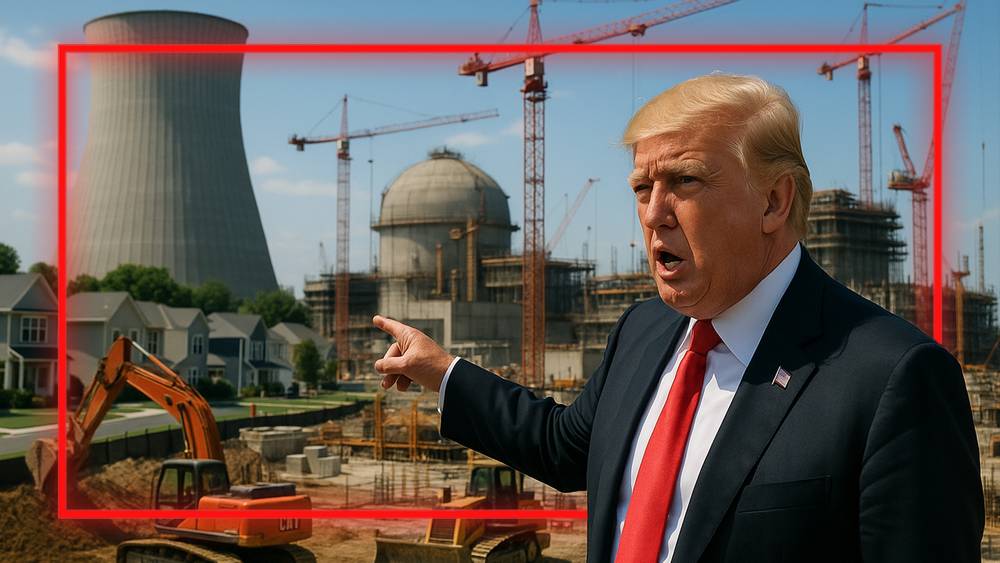
🆘 9 Key Takeaways from President Trump’s Executive Orders on Nuclear Energy
Breaking down the President's plan to usher in a nuclear renaissance and expand America’s Energy Dominance agenda.
June 10, 2025
Breaking down the President's plan to usher in a nuclear renaissance and expand America’s Energy Dominance agenda.
June 10, 2025On May 23, President Trump announced four executive orders aimed at reinvigorating America’s nuclear energy industry.
The orders lay out a plan to modernize nuclear regulation, streamline nuclear reactor testing, deploy nuclear reactors for national security, and reinvigorate the nuclear industrial base.
Together, they represent a bold new strategy for unleashing American energy and continuing our nation’s dominance as the world’s nuclear energy leader.
Let’s take a closer look at some of the key changes outlined in the executive orders:
1. Speed up Nuclear Reactor Licensing
President Trump wants the U.S. Department of Energy (DOE) to play a large role in significantly reducing regulatory risks to accelerate nuclear reactor licensing.
The executive orders instruct the U.S. Nuclear Regulatory Commission (NRC) to create an expedited pathway to approve reactors that have been safely tested by DOE or the Department of Defense (DoD). Also included is a comprehensive review of the NRC and the establishment of a deadline to evaluate and approve new construction and operation licenses within 18 months.
2. Add 300 Gigawatts of New U.S. Nuclear Capacity by 2050
The United States is the number one producer of nuclear energy in the world, but just three of the nation’s commercial nuclear reactors were completed in the 21st century. President Trump’s executive orders seek to accelerate deployment of new nuclear reactor technologies and expand American nuclear energy capacity from around 100 GW today to 400 GW by 2050. That includes:
- Working with industry to facilitate 5 gigawatts of power uprates
- Leveraging the Department’s Loan Programs Office to support reactor restarts and finish partially completed construction projects
- Improving supply chains
- Having 10 new large reactors with complete designs under construction by 2030
3. Lay the Groundwork for Faster Reactor Testing
The executive order proposes that three pilot reactors could be built and tested outside of the national laboratories with the goal of achieving criticality by July 4, 2026, as part of an overarching plan to shorten the length of time it takes to test advanced reactors.
Going forward, DOE will revise its regulations and guidance for expedited review and approval of reactor projects under its supervision. The Department will also use all available authorities to eliminate or expedite its environmental reviews for authorizations, permits, approvals, leases, and any other activity requested by an applicant or potential applicant.
4. Deploy U.S. Reactors for AI and Military Bases
Advanced nuclear technology is cited in the executive orders as a pivotal element of President Trump’s national security strategy. He directed DOE to designate AI data centers as critical defense facilities and tasked the Secretary of Energy with utilizing all available legal authorities to site, approve, and authorize deployment of advanced reactors to power them. DOE will lay the groundwork for building and operating an advanced nuclear reactor supporting AI or other critical infrastructure no later than October 2027.
DoD was also directed to build a nuclear reactor at a domestic military installation to commence operations within the next three years, with DOE providing the technical advice needed for the design, construction, and operation of these military installation reactors. The two agencies were also instructed to coordinate on assessing the feasibility of restarting or repurposing closed nuclear power plants as energy hubs for military microgrid support.
5. Explore Fuel Recycling and Reprocessing
The United States hasn’t recycled or reprocessed commercial spent nuclear fuels since the 1970s, and the President’s executive orders seek to change that. To that end, DOE is instructed to find ways to efficiently transfer spent nuclear fuel from commercial light-water reactors to a government-owned, privately operated reprocessing and recycling facility. The Department will also evaluate reprocessing and recycling of spent nuclear fuel from DOE- and DoD-managed reactors and recommend improvements to those processes to make efficient use of the recovered materials. Additionally, the President ordered the creation of a program to dispose of surplus plutonium by processing and making it available for advanced reactor fuel fabrication and identify ways to permanently dispose of the waste products.
6. Amp up Domestic Nuclear Fuel Production
One of the big takeaways from the executive orders is that President Trump wants to maximize domestic production of nuclear fuel. Building out the U.S. nuclear fuel supply chain will reduce the nation’s dependence on foreign sources of uranium and enable long-term expansion of American nuclear energy. That means a focus on increased mining, enrichment, conversion and deconversion capabilities — and even recycling and reprocessing of spent nuclear fuel — with assistance from DOE-supported nuclear industry consortia. Of note: DOE will release at least 20 metric tons of high-assay low-enriched uranium (HALEU) into a fuel bank for private sector projects powering AI infrastructure at DOE sites.
7. Bolster the American Nuclear Workforce
According to the executive orders, 60 percent of the nuclear workforce is between the ages of 30 and 60. In order to generate a pipeline of workers to supply the demand for this crucial industry, new emphasis will be placed on increasing participation in nuclear-related apprenticeships and education programs. Nuclear engineering and nuclear energy-related careers will be considered priority areas for federal investment, and DOE is also directed to increase access to R&D infrastructure, workforce, and expertise at the national laboratories for college and university nuclear engineering students.
8. Assess Spent Nuclear Fuel Management
Spent nuclear fuel was another key issue highlighted. President Trump tasked the secretaries of energy, defense, and transportation, along with the director of the Office of Management and Budget, to recommend a national policy on spent nuclear fuel management and high-level waste that considers the development and deployment of advanced fuel cycle capabilities to establish a safe, secure, and sustainable long-term fuel cycle.
America’s Nuclear Renaissance
With the pressing need for more American energy to meet the challenges of AI and secure our nation’s energy dominance, President Trump’s vision for a revitalized U.S. nuclear energy industry comes at the perfect time. These executive orders will unshackle our civil nuclear potential and usher in an American nuclear energy renaissance, ensuring abundant, reliable, and affordable energy for the United States. Tell uswhat you think!
🔴🔴🔴
How 5 Billion Starfish Died On West Coast USA— Since 2013 Mass Die-off Over Five Billion Starfish Off West Coast USA— In 2011 Radioactive Nuclear ☢️
Fukushima Nuclear Accident Discharge: Animation of Macroscopic Diffusion...


As well…
Since 2013 Mass Die-off Over Five Billion Starfish Off West Coast USA— In 2011 Radioactive Nuclear ☢️ Waste And Byproducts Flowed — from Fukushima, Japan 🇯🇵 Daichi Nuclear Power Plant after a tsunami struck Japan on March 11, 2011 and the radioactive material collects regularly until it is discharged into the Pacific Ocean. The radioactive material encircles the sea moving from Japan to Alaska then down to Baja California and towards Hawaii and repeatedly cycles with the sea current disturbing and destroying sea life and plants and animals one and all. The rogue Obama government was angered that Japan withheld uranium from deep state destructive intent with the uranium, and in retaliation to Japan Obama and military set the tsunami into action with ships carrying the devices necessary for such actions. A year later Bill Gates hired a shipping company to dispose of iron sulfates: 100 tonnes of iron sulphate dumped off Canada’s Pacific coast (Simply put, sea animals and plants were and continue to be radiated by Daichi and suffocated Bill Gates iron sulfates depriving oxygen to them! Wait, that’s what German government did to Jews and Christians in the Holocaust during World War II, starved the people then gassed them with radiation showers!)
An American entrepreneur with a controversial past in geoengineering dumped the iron dust into the Pacific near the Haida Gwaii islands in July after allegedly telling local villagers that the “experiment” was a salmon restoration project, according to ETC Group, an international environmental watchdog with offices in Canada.
Russ George, a U.S. businessman, “blatantly violated” two international moratoria when he dumped the iron dust, Jim Thomas of ETC told Torstar News Service on Monday — a UN convention and the London Convention on the disposal of wastes at sea.
Ocean iron fertilization — a highly controversial practice — means stimulating plankton blooms in open water, which then seize carbon from the atmosphere and, on sinking to the bottom of the ocean, store it away. Earlier experiments, about a dozen mostly done by universities, have shown mixed results.
George did not respond to requests for comment from Torstar News Service but told the Guardian the two moratoria are a “mythology” and do not apply to his project.
He called the experiment the “most substantial ocean restoration project in history,” and said it has collected a “greater density and depth of scientific data than ever before.”
George, the former chief executive of Planktos Inc., made headlines in 2007 after failed attempts to make similar dumps near the Galapagos and Canary Islands. His ship was barred from ports by the Spanish and Ecuadorean governments. Planktos abruptly closed down months later.
According to the president of the Haida nation, Guujaaw, a village on the islands was specifically told the dump would benefit the ocean.
“They agreed, believing fully that it was a positive project . . . for salmon enhancement,” Guujaaw told Torstar News Service.
He added they would have never agreed if they known it violated the international agreements.
“We live off marine environment,” said Guujaaw, who uses one name. “We would never do anything to wreck it.”
Thomas of ETC said George convinced the villagers to set up a company to channel more than $1 million of its own funds into the project. He promised it would help sell carbon credits and that would earn money for the community.
Satellite images obtained by the Guardian confirm George’s claim that the iron has spawned an artificial plankton bloom as large as 10,000 square kilometres.
What impact that kind of a dump will have on the ocean and marine life isn’t yet clear.
Ocean iron fertilization has been defined by the Royal Society, an international scientific agency, as having “high potential for unintended and undesirable ecological side effects,” and not proven effective.
Charles Miller, an oceanographer at Oregon State University, echoed that sentiment.
“There are lots of unanswered questions,” Miller told Torstar News Service. “How much did he dump? Who was monitoring it? What the long-term impact will be . . . is difficult to assess.”
Given George’s history, “it is unlikely he got anyone qualified to co-operate with him,” said Miller.
John Cullen, an oceanographer at Dalhousie University, told the Guardian that some possible effects, such as deep-water oxygen depletion and alteration of distant food webs, should rule out ocean manipulation.
“History is full of examples of ecological manipulations that backfired,” he said.
Why this story is relevant: shortly after this deadly assault on the sea and all within it a mega earthquake hit off of the Canada islands near Queensland Canada! Starvation and suffocation of plants and animals is torture.
Scientists say they have solved the mystery of what killed more than 5 billion sea stars— But they are wrong
WASHINGTON (AP) — Scientists say they have at last solved the mystery of what killed more than 5 billion sea stars off the Pacific coast of North America in a decade-long epidemic.
Sea stars – often known as starfish – typically have five arms and some species sport up to 24 arms. They range in color from solid orange to tapestries of orange, purple, brown and green.
Starting in 2013, a mysterious sea star wasting disease sparked a mass die-off from Mexico to Alaska. The epidemic has devastated more than 20 species and continues today. Worst hit was a species called the sunflower sea star, which lost around 90% of its population in the outbreak’s first five years.
Read more https://www.yahoo.com/news/articles/scientists-solved-mystery-killed-more-150041997.html


How 5 Billion Starfish Died On West Coast USA— Since 2013 Mass Die-off Over Five Billion Starfish Off West Coast USA— In 2011 Radioactive Nuclear ☢️ Waste And Byproducts Flowed — from Fukushima, Japan 🇯🇵 Daichi Nuclear Power Plant after a tsunami struck Japan on March 11, 2011 and the radioactive material collects regularly until it is discharged into the Pacific Ocean.
Related articles:
🆘🆘🆘 Zero Nuclear Power Stations Are The Solution Mr. President! Not one in every city!
What happened at Santa Susana?
A 1959 meltdown and a 2018 fire compounded a tragedy

Comments