How 5 Billion Starfish Died On West Coast USA— Since 2013 Mass Die-off Over Five Billion Starfish Off West Coast USA— In 2011 Radioactive Nuclear ☢️ Waste And Byproducts Flowed — from Fukushima, Japan 🇯🇵 Daichi Nuclear Power Plant after a tsunami struck Japan on March 11, 2011 and the radioactive material collects regularly until it is discharged into the Pacific Ocean.
How 5 Billion Starfish Died On West Coast USA— Since 2013 Mass Die-off Over Five Billion Starfish Off West Coast USA— In 2011 Radioactive Nuclear ☢️ Waste And Byproducts Flowed — from Fukushima, Japan 🇯🇵 Daichi Nuclear Power Plant after a tsunami struck Japan on March 11, 2011 and the radioactive material collects regularly until it is discharged into the Pacific Ocean.
Related articles:
🆘🆘🆘 Zero Nuclear Power Stations Are The Solution Mr. President! Not one in every city!
What happened at Santa Susana?
A 1959 meltdown and a 2018 fire compounded a tragedy
By Carmi Orenstein
When the United Nations Human Rights Council officially recognized access to “a safe, clean, healthy and sustainable environment” as a basic human right earlier last October, it was an acknowledgement fifty years in the making. It was backed by an international grassroots effort, with the journey to the final vote including the voices of more than 100,000 children around the world and multiple generations of allies pushing against powerful corporate opposition.
Just about the time that this half-century-long campaign to enshrine the right to a safe environment kicked off, a story about the horrific violation of this same human right and its cover-up emerged in a community near my own childhood home in Southern California. In 1979, a UCLA student named Michael Rose uncovered evidence of a partial nuclear meltdown at the Santa Susana Field Lab (SSFL) in the Simi Hills outside of Los Angeles. The SSFL, formerly known as Rocketdyne, played key government roles throughout the Cold War, developing and testing rocket engines and conducting experiments with nuclear reactors. Today, as the result of a recently published peer-reviewed study that represents the dogged efforts of both professional researchers and a team of specially trained citizens, we have solid evidence of the spread of dangerous contamination from that site.
Working with nuclear safety expert and then-UCLA professor Daniel Hirsch, Rose discovered documentation that the partial nuclear meltdown had occurred at SSFL twenty years earlier in 1959, releasing up to 459 times more radiation into the environment than the infamous meltdown at the Three Mile Island nuclear reactor in Pennsylvania. Unlike the Three Mile Island facility, the SSFL reactors lacked containment structures—those tell-tale concrete domes that surround commercial nuclear power plants to prevent radiation spread in case of a nuclear accident.
In addition to the 1959 meltdown, at least three of the site’s other nuclear reactors experienced accidents (in 1957, 1964 and 1969), and radioactive and chemical wastes burned in open-air pits as a matter of practice. A “hot lab,” which may have been the nation’s largest, was also located at SSFL, and, in 1957, it burned and was known to have spread radioactivity throughout the site. A progress report from the period states, “Because such massive contamination was not anticipated, the planned logistics of cleanup were not adequate for the situation.”
The rest of this story is an object lesson in what happens when the right to a safe environment is not universally acknowledged and when secretive, long-forgotten toxic legacies of the Cold War meet the unpredictable chaos of the current climate crisis. Real people are harmed in ways that are not easily remediable—including, perhaps, members of my family.
The radioactive contamination of the surrounding environment caused by the partial nuclear meltdown at the 2,849-acre SSFL site was not cleaned up by the time of Rose’s revelation. Nor was the extensive toxic chemical contamination on site. It is still not cleaned up. Thus, when the climate chaos-fueled Woolsey Fire erupted at, and burned through, the SSFL in 2018, the flames served to spread the contamination even further. The fire quickly burned 80 percent of the SSFL property, and onward, all the way to the ocean. Pushed by high winds and uncontained for nearly two weeks, the Woolsey Fire killed three people outright and destroyed over 1,600 structures.
Today, public knowledge of the original disaster and its continued radioactive and toxic legacy is still patchy. The silence that surrounded the catastrophe in 1959 gave way to intermittent waves of focused media attention, celebrity involvement, and inquiry and outcry on the part of elected officials in the years since the 1979 expose. These have been followed by whistleblower accounts from former workers, and various forms of citizen activism. While occasional news of confidential legal settlements addressing illness and contamination breaks through, the Santa Susana disaster is hardly a household name—including among those of us who grew up in its shadow.
The suburbs on either side of the SSFL, in Ventura County and a western edge of Los Angeles County, are still expanding. More than 500,000 people currently live within about ten miles of the site. Parents vs. SSFL is the dynamic, parent-led group currently at the helm of public monitoring of, and demand for, a comprehensive cleanup. On their social media sites, one often sees public comments from nearby residents along the lines of why were we not told?
To be sure, the history of site ownership and responsibility is complex and makes redress of grievance vexing. Although Rocketdyne owned the facility at the time of the meltdown, most of the site is now owned by Boeing. However, some of the property is owned by NASA, who in turn leases parts of its property as SSFL to the U.S. Department of Energy (DOE). California’s Department of Toxic Substances Control (DTSC), the lead regulatory agency for remediation, entered into a Consent Order with these “responsible parties,” in 2007. In 2010, stricter agreements were signed with DOE and NASA to clean up the properties for which they are responsible to “background levels.”
In 2017 a legally binding agreement deadline for completion of cleanup was blown by, with no meaningful cleanup begun. In 2018 the Woolsey Fire came roaring through. That fire is now documented to have redistributed radioactive materials and toxic chemicals in surrounding areas. Non-binding,confidential negotiations with Boeing were just announced early this year. It is a confounding and maddening journey to anyone attempting to follow.
As Melissa Bumstead, co-founder of Parents vs SSFL, said in a Physicians for Social Responsibility-Los Angeles press releaseabout the new study: “The bottom line is, if SSFL had been cleaned up by 2017 as required by the cleanup agreements, the community wouldn’t have had to worry about contamination released by the Woolsey Fire.”
More https://beyondnuclearinternational.org/2022/06/26/what-happened-at-santa-susana/
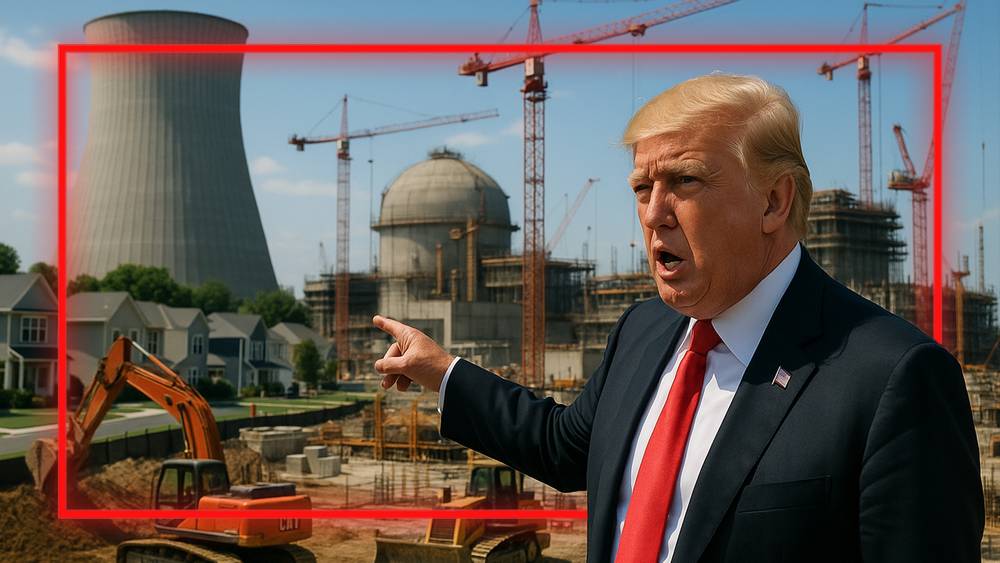
🆘 9 Key Takeaways from President Trump’s Executive Orders on Nuclear Energy
Breaking down the President's plan to usher in a nuclear renaissance and expand America’s Energy Dominance agenda.
June 10, 2025
Breaking down the President's plan to usher in a nuclear renaissance and expand America’s Energy Dominance agenda.
June 10, 2025On May 23, President Trump announced four executive orders aimed at reinvigorating America’s nuclear energy industry.
The orders lay out a plan to modernize nuclear regulation, streamline nuclear reactor testing, deploy nuclear reactors for national security, and reinvigorate the nuclear industrial base.
Together, they represent a bold new strategy for unleashing American energy and continuing our nation’s dominance as the world’s nuclear energy leader.
Let’s take a closer look at some of the key changes outlined in the executive orders:
1. Speed up Nuclear Reactor Licensing
President Trump wants the U.S. Department of Energy (DOE) to play a large role in significantly reducing regulatory risks to accelerate nuclear reactor licensing.
The executive orders instruct the U.S. Nuclear Regulatory Commission (NRC) to create an expedited pathway to approve reactors that have been safely tested by DOE or the Department of Defense (DoD). Also included is a comprehensive review of the NRC and the establishment of a deadline to evaluate and approve new construction and operation licenses within 18 months.
2. Add 300 Gigawatts of New U.S. Nuclear Capacity by 2050
The United States is the number one producer of nuclear energy in the world, but just three of the nation’s commercial nuclear reactors were completed in the 21st century. President Trump’s executive orders seek to accelerate deployment of new nuclear reactor technologies and expand American nuclear energy capacity from around 100 GW today to 400 GW by 2050. That includes:
- Working with industry to facilitate 5 gigawatts of power uprates
- Leveraging the Department’s Loan Programs Office to support reactor restarts and finish partially completed construction projects
- Improving supply chains
- Having 10 new large reactors with complete designs under construction by 2030
3. Lay the Groundwork for Faster Reactor Testing
The executive order proposes that three pilot reactors could be built and tested outside of the national laboratories with the goal of achieving criticality by July 4, 2026, as part of an overarching plan to shorten the length of time it takes to test advanced reactors.
Going forward, DOE will revise its regulations and guidance for expedited review and approval of reactor projects under its supervision. The Department will also use all available authorities to eliminate or expedite its environmental reviews for authorizations, permits, approvals, leases, and any other activity requested by an applicant or potential applicant.
4. Deploy U.S. Reactors for AI and Military Bases
Advanced nuclear technology is cited in the executive orders as a pivotal element of President Trump’s national security strategy. He directed DOE to designate AI data centers as critical defense facilities and tasked the Secretary of Energy with utilizing all available legal authorities to site, approve, and authorize deployment of advanced reactors to power them. DOE will lay the groundwork for building and operating an advanced nuclear reactor supporting AI or other critical infrastructure no later than October 2027.
DoD was also directed to build a nuclear reactor at a domestic military installation to commence operations within the next three years, with DOE providing the technical advice needed for the design, construction, and operation of these military installation reactors. The two agencies were also instructed to coordinate on assessing the feasibility of restarting or repurposing closed nuclear power plants as energy hubs for military microgrid support.
5. Explore Fuel Recycling and Reprocessing
The United States hasn’t recycled or reprocessed commercial spent nuclear fuels since the 1970s, and the President’s executive orders seek to change that. To that end, DOE is instructed to find ways to efficiently transfer spent nuclear fuel from commercial light-water reactors to a government-owned, privately operated reprocessing and recycling facility. The Department will also evaluate reprocessing and recycling of spent nuclear fuel from DOE- and DoD-managed reactors and recommend improvements to those processes to make efficient use of the recovered materials. Additionally, the President ordered the creation of a program to dispose of surplus plutonium by processing and making it available for advanced reactor fuel fabrication and identify ways to permanently dispose of the waste products.
6. Amp up Domestic Nuclear Fuel Production
One of the big takeaways from the executive orders is that President Trump wants to maximize domestic production of nuclear fuel. Building out the U.S. nuclear fuel supply chain will reduce the nation’s dependence on foreign sources of uranium and enable long-term expansion of American nuclear energy. That means a focus on increased mining, enrichment, conversion and deconversion capabilities — and even recycling and reprocessing of spent nuclear fuel — with assistance from DOE-supported nuclear industry consortia. Of note: DOE will release at least 20 metric tons of high-assay low-enriched uranium (HALEU) into a fuel bank for private sector projects powering AI infrastructure at DOE sites.
7. Bolster the American Nuclear Workforce
According to the executive orders, 60 percent of the nuclear workforce is between the ages of 30 and 60. In order to generate a pipeline of workers to supply the demand for this crucial industry, new emphasis will be placed on increasing participation in nuclear-related apprenticeships and education programs. Nuclear engineering and nuclear energy-related careers will be considered priority areas for federal investment, and DOE is also directed to increase access to R&D infrastructure, workforce, and expertise at the national laboratories for college and university nuclear engineering students.
8. Assess Spent Nuclear Fuel Management
Spent nuclear fuel was another key issue highlighted. President Trump tasked the secretaries of energy, defense, and transportation, along with the director of the Office of Management and Budget, to recommend a national policy on spent nuclear fuel management and high-level waste that considers the development and deployment of advanced fuel cycle capabilities to establish a safe, secure, and sustainable long-term fuel cycle.
America’s Nuclear Renaissance
With the pressing need for more American energy to meet the challenges of AI and secure our nation’s energy dominance, President Trump’s vision for a revitalized U.S. nuclear energy industry comes at the perfect time. These executive orders will unshackle our civil nuclear potential and usher in an American nuclear energy renaissance, ensuring abundant, reliable, and affordable energy for the United States. Tell uswhat you think!
🔴🔴🔴
How 5 Billion Starfish Died On West Coast USA— Since 2013 Mass Die-off Over Five Billion Starfish Off West Coast USA— In 2011 Radioactive Nuclear ☢️
Fukushima Nuclear Accident Discharge: Animation of Macroscopic Diffusion...


As well…
Since 2013 Mass Die-off Over Five Billion Starfish Off West Coast USA— In 2011 Radioactive Nuclear ☢️ Waste And Byproducts Flowed — from Fukushima, Japan 🇯🇵 Daichi Nuclear Power Plant after a tsunami struck Japan on March 11, 2011 and the radioactive material collects regularly until it is discharged into the Pacific Ocean. The radioactive material encircles the sea moving from Japan to Alaska then down to Baja California and towards Hawaii and repeatedly cycles with the sea current disturbing and destroying sea life and plants and animals one and all. The rogue Obama government was angered that Japan withheld uranium from deep state destructive intent with the uranium, and in retaliation to Japan Obama and military set the tsunami into action with ships carrying the devices necessary for such actions. A year later Bill Gates hired a shipping company to dispose of iron sulfates: 100 tonnes of iron sulphate dumped off Canada’s Pacific coast (Simply put, sea animals and plants were and continue to be radiated by Daichi and suffocated Bill Gates iron sulfates depriving oxygen to them! Wait, that’s what German government did to Jews and Christians in the Holocaust during World War II, starved the people then gassed them with radiation showers!)
An American entrepreneur with a controversial past in geoengineering dumped the iron dust into the Pacific near the Haida Gwaii islands in July after allegedly telling local villagers that the “experiment” was a salmon restoration project, according to ETC Group, an international environmental watchdog with offices in Canada.
Russ George, a U.S. businessman, “blatantly violated” two international moratoria when he dumped the iron dust, Jim Thomas of ETC told Torstar News Service on Monday — a UN convention and the London Convention on the disposal of wastes at sea.
Ocean iron fertilization — a highly controversial practice — means stimulating plankton blooms in open water, which then seize carbon from the atmosphere and, on sinking to the bottom of the ocean, store it away. Earlier experiments, about a dozen mostly done by universities, have shown mixed results.
George did not respond to requests for comment from Torstar News Service but told the Guardian the two moratoria are a “mythology” and do not apply to his project.
He called the experiment the “most substantial ocean restoration project in history,” and said it has collected a “greater density and depth of scientific data than ever before.”
George, the former chief executive of Planktos Inc., made headlines in 2007 after failed attempts to make similar dumps near the Galapagos and Canary Islands. His ship was barred from ports by the Spanish and Ecuadorean governments. Planktos abruptly closed down months later.
According to the president of the Haida nation, Guujaaw, a village on the islands was specifically told the dump would benefit the ocean.
“They agreed, believing fully that it was a positive project . . . for salmon enhancement,” Guujaaw told Torstar News Service.
He added they would have never agreed if they known it violated the international agreements.
“We live off marine environment,” said Guujaaw, who uses one name. “We would never do anything to wreck it.”
Thomas of ETC said George convinced the villagers to set up a company to channel more than $1 million of its own funds into the project. He promised it would help sell carbon credits and that would earn money for the community.
Satellite images obtained by the Guardian confirm George’s claim that the iron has spawned an artificial plankton bloom as large as 10,000 square kilometres.
What impact that kind of a dump will have on the ocean and marine life isn’t yet clear.
Ocean iron fertilization has been defined by the Royal Society, an international scientific agency, as having “high potential for unintended and undesirable ecological side effects,” and not proven effective.
Charles Miller, an oceanographer at Oregon State University, echoed that sentiment.
“There are lots of unanswered questions,” Miller told Torstar News Service. “How much did he dump? Who was monitoring it? What the long-term impact will be . . . is difficult to assess.”
Given George’s history, “it is unlikely he got anyone qualified to co-operate with him,” said Miller.
John Cullen, an oceanographer at Dalhousie University, told the Guardian that some possible effects, such as deep-water oxygen depletion and alteration of distant food webs, should rule out ocean manipulation.
“History is full of examples of ecological manipulations that backfired,” he said.
Why this story is relevant: shortly after this deadly assault on the sea and all within it a mega earthquake hit off of the Canada islands near Queensland Canada! Starvation and suffocation of plants and animals is torture.
Scientists say they have solved the mystery of what killed more than 5 billion sea stars— But they are wrong
WASHINGTON (AP) — Scientists say they have at last solved the mystery of what killed more than 5 billion sea stars off the Pacific coast of North America in a decade-long epidemic.
Sea stars – often known as starfish – typically have five arms and some species sport up to 24 arms. They range in color from solid orange to tapestries of orange, purple, brown and green.
Starting in 2013, a mysterious sea star wasting disease sparked a mass die-off from Mexico to Alaska. The epidemic has devastated more than 20 species and continues today. Worst hit was a species called the sunflower sea star, which lost around 90% of its population in the outbreak’s first five years.
Read more https://www.yahoo.com/news/articles/scientists-solved-mystery-killed-more-150041997.html
Comments